Replacing windows in a Victorian terrace, Edwardian semi or Georgian cottage is never simply a matter of measuring an opening and choosing a frame. The best windows for period homes respect the proportions and details that give a property its character, while delivering the warmth, security and low maintenance expected of a modern home.
A poorly matched replacement can make an otherwise handsome property look flat or out of place. The right choice, however, can sharpen kerb appeal, reduce draughts and help retain the value that attracted you to the house in the first place.
Start with the character of the property
Period homes are not one architectural style. Georgian properties are often defined by tall, elegant sash windows with fine glazing bars. Victorian homes may have larger bay windows, horned sashes and more decorative details. Edwardian properties commonly feature simpler, lighter designs, sometimes with leaded upper lights or coloured glass.
Before selecting a material or glazing specification, look closely at the original windows, neighbouring homes and the proportions of the building. The number and arrangement of panes, the depth of the frame, the sightlines and even the profile of the sash all influence whether replacement windows feel convincing.
This does not mean every home needs an exact historical reconstruction. Many homeowners want a sympathetic appearance with better insulation and easier day-to-day care. The aim is to preserve the visual language of the house, not to turn it into a museum piece.
The best window styles for period homes
Sliding sash windows for traditional elegance
Sliding sash windows are often the natural choice for Georgian and Victorian homes. Their vertical movement, balanced proportions and refined glazing-bar layouts are central to the appearance of many older façades.
Modern sliding sash windows can recreate traditional detailing while adding double glazing, secure locking and improved weather seals. They are particularly effective in bay windows, where the repetition of narrow, vertical sashes maintains the rhythm of the original design.
Details matter here. A sash with overly chunky sections or inappropriate glazing bars can lose the delicacy of a traditional window. Where authenticity is a priority, choose slim, well-proportioned frames and specify features such as run-through sash horns where appropriate to the age of the property.
Flush casement windows for cottages and early 20th-century homes
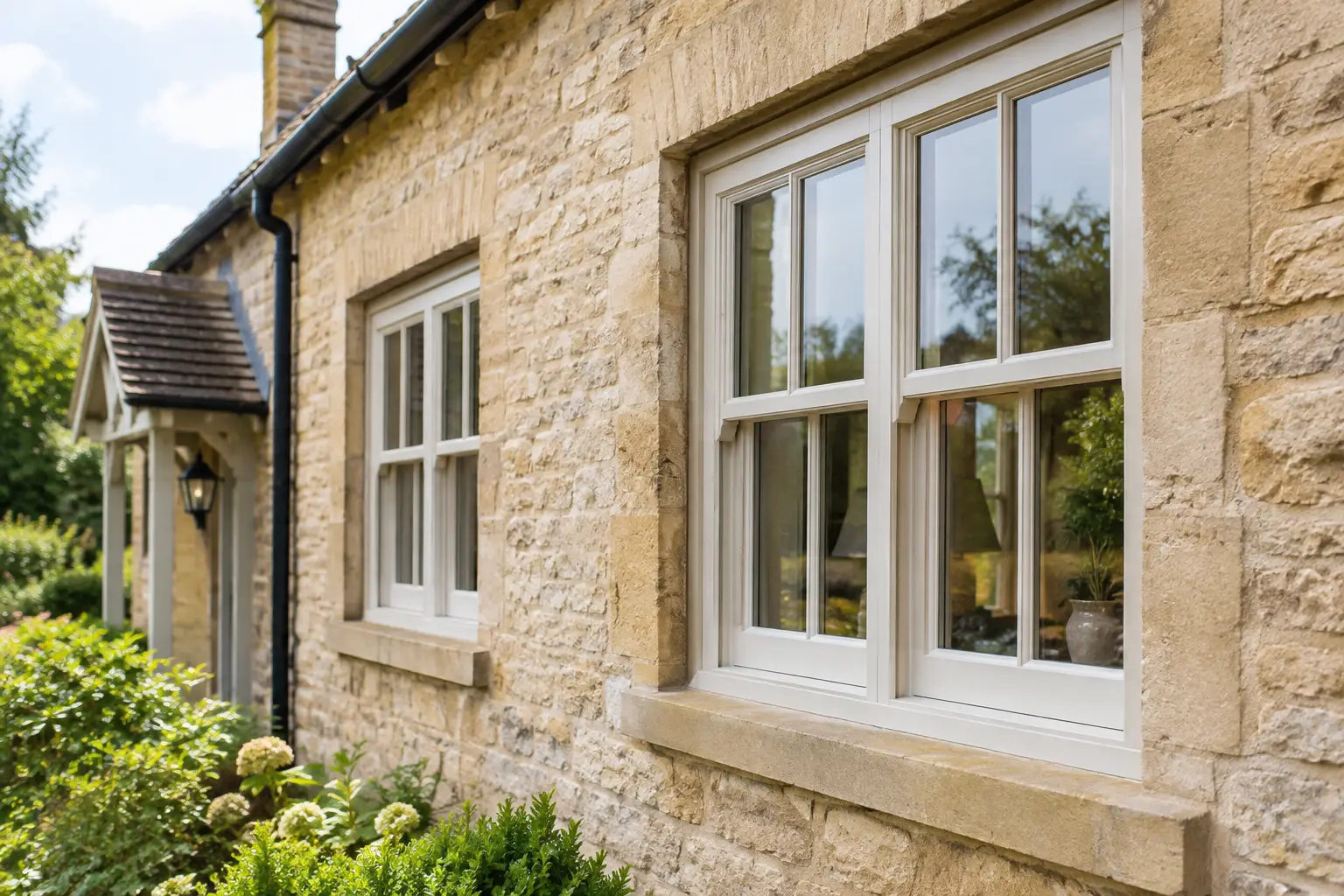
Flush casement windows sit level within their frames when closed, creating a clean, traditional appearance. They suit cottages, farmhouses and many Edwardian or Arts and Crafts-inspired homes, especially where side-hung opening windows were part of the original design.
A well-designed flush casement can offer the look of painted timber with the performance benefits of contemporary materials. Options such as woodgrain finishes, traditional handles, dummy butt hinges and heritage glazing bars can make a significant difference to the finished result.
They are also a practical choice where easy opening and ventilation are priorities. Unlike sliding sashes, casements can open wider, which may be useful in kitchens, bedrooms and rooms that need more fresh air.
Bespoke shapes for bays, arches and feature windows
Period properties often include more than standard rectangular openings. Curved bays, arched tops, stained-glass panels and unusual proportions are part of their charm. These features should be measured and considered as individual elements, rather than forced into a standard replacement design.
Bespoke manufacturing allows the window to follow the opening accurately and retain the architectural intent of the building. It can also prevent the common problem of wide infill sections or oversized frames reducing the amount of visible glass.
Which material is right for an older property?
There is no single answer. The best material depends on the property’s architectural significance, your maintenance expectations, planning requirements and budget.
Timber: authentic and enduring
Timber remains the most authentic choice for many listed buildings and conservation-area homes. Its natural grain, fine profiles and ability to be repaired make it particularly suited to historic properties. A painted timber sash or casement can look entirely at home where modern materials may be restricted or visually unsuitable.
The trade-off is maintenance. High-quality engineered timber, durable paint systems and professional installation all help improve longevity, but timber still needs periodic inspection and repainting. For homeowners who value original character above all else, that care is often worthwhile.
uPVC: practical heritage styling
Modern uPVC has moved well beyond the bulky, bright-white frames that can look out of place on older homes. Premium flush casement and sliding sash systems are available in sympathetic colours and wood-effect finishes, with slimmed-down profiles and carefully chosen hardware.
For many period homeowners, heritage-style uPVC offers a sensible balance of appearance, thermal efficiency and minimal upkeep. It will not replicate timber in every detail, but a high-quality system, properly specified for the house, can be an excellent long-term investment.
Avoid choosing solely on price. The difference between an entry-level replacement and a well-designed heritage system is often most visible in the frame proportions, opening arrangement and finishing details.
Aluminium: best used with care
Aluminium is strong, durable and ideal for achieving slim sightlines. It can work particularly well for discreet rear extensions, garden rooms or contemporary alterations to a period home, where a clear distinction between old and new is part of the design.
For front elevations or traditional openings, aluminium is usually less convincing than timber or a heritage uPVC sash or flush casement. It depends on the design brief. A sympathetic restoration may call for traditional materials, while a carefully designed extension may benefit from aluminium’s cleaner, more contemporary lines.
Do not compromise on glazing performance
Original single-glazed windows can be draughty, cold to the touch and susceptible to outside noise. Replacing them is an opportunity to improve comfort substantially, but the glazing needs to suit the frame and the property.
Double glazing is the standard choice for most replacement projects, helping to retain heat and reduce noise. In some heritage settings, slim double-glazed units may be required to preserve narrow glazing bars and traditional frame depths. These can offer a more authentic appearance than standard units, although they may cost more.
Where full replacement is not permitted or desirable, secondary glazing can be a considered alternative. Installed internally, it leaves original windows in place while improving insulation and sound reduction. It can be especially useful for listed buildings, although it changes the internal view and requires careful detailing.
A good installer will discuss the complete window specification, including glass, seals, locking, ventilation and installation method. Thermal performance is not determined by the glass alone. A poorly fitted window can still create cold spots, draughts and condensation around the reveal.
Planning, conservation areas and listed buildings
Before ordering windows, establish whether your home is listed or located within a conservation area. Restrictions can apply to materials, opening methods, glazing patterns, colour and even the visibility of replacements from the road.
Planning rules vary by local authority, and listed building consent is a separate consideration. Do not assume that matching the existing windows visually will automatically be accepted. It is wise to check early, particularly if your home has original surviving joinery or prominent street-facing windows.
For properties across Nottinghamshire, Lincolnshire, Leicestershire, Derbyshire and Rutland, local architectural character can vary considerably from one village or town to the next. A consultative survey helps ensure the proposed design works for both the property and any relevant planning requirements.
Focus on the details people notice
The best replacement windows are rarely defined by one feature. They succeed because the details work together. Frame colour should complement the brickwork, stone or render. Glazing bars should be correctly proportioned and positioned. Handles, stays and hinges should suit the window style rather than appearing as an afterthought.
Think about the view from inside as well. Deep frame sections, poorly placed trickle vents or wide glass spacers can alter the character of a room. Where heritage appearance is important, ask to see samples, corner sections and examples of completed installations before making a final decision.
Installation deserves equal attention. Accurate surveying, neat finishing and appropriate trim work protect both the appearance and weather performance of the new windows. At Kingdom Architectural Glazing Systems, this is approached as a complete design-and-installation decision, not simply a product purchase.
A worthwhile upgrade should look as though it has always belonged
The right windows should make a period home warmer, quieter and more secure without erasing the features that make it distinctive. Take time to understand the property, choose materials that suit its setting and invest in detailed, professional fitting. When those decisions are made well, the improvement feels natural from the pavement and every room inside.
Recent News
10 October 2026
Conservatory Roof Upgrade Benefits That Matter
8 October 2026
French Doors for Brighter Garden Living Spaces
6 October 2026
How to Choose Aluminium Bifold Doors That Last
4 October 2026
Heritage Style Aluminium Windows for Period Homes