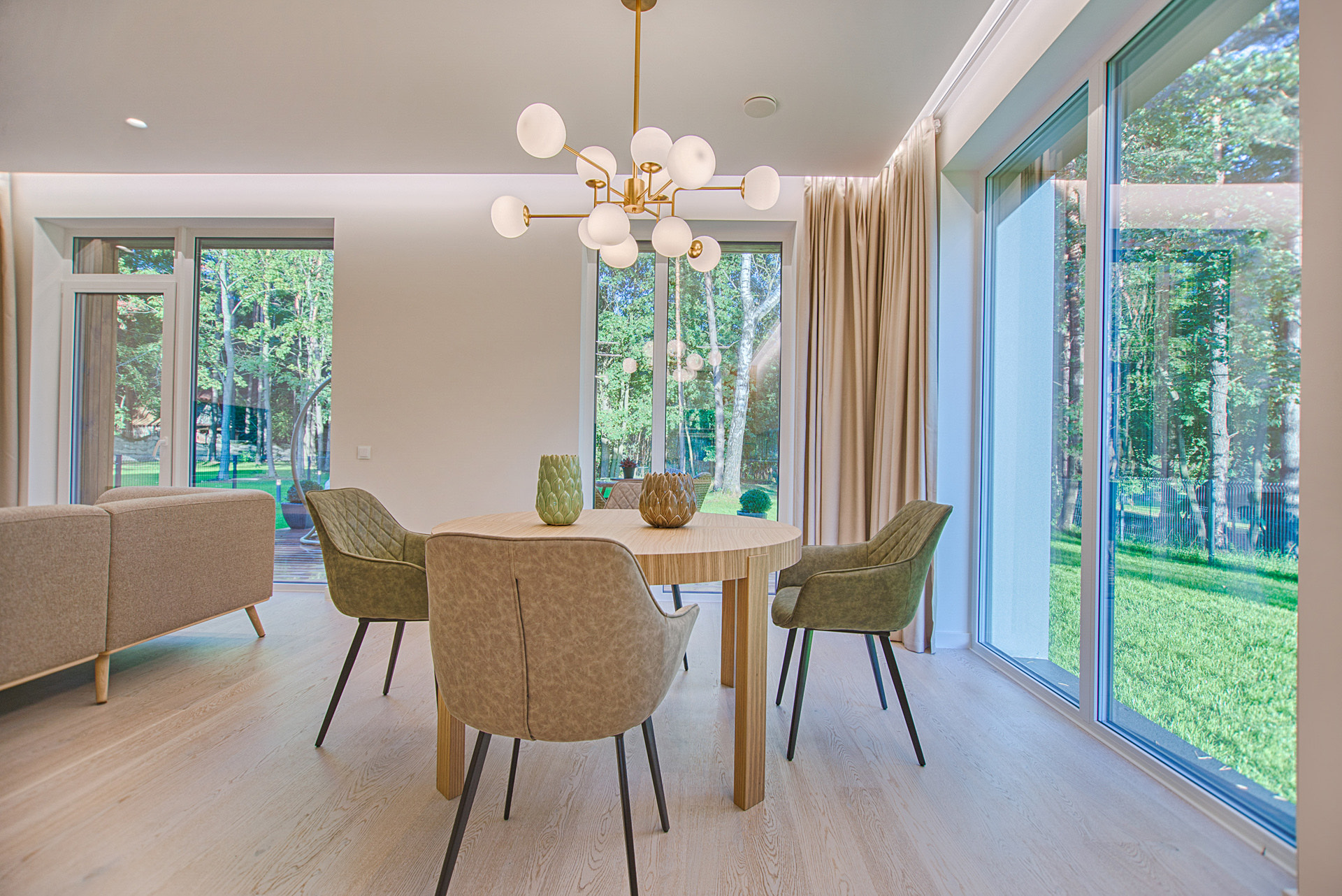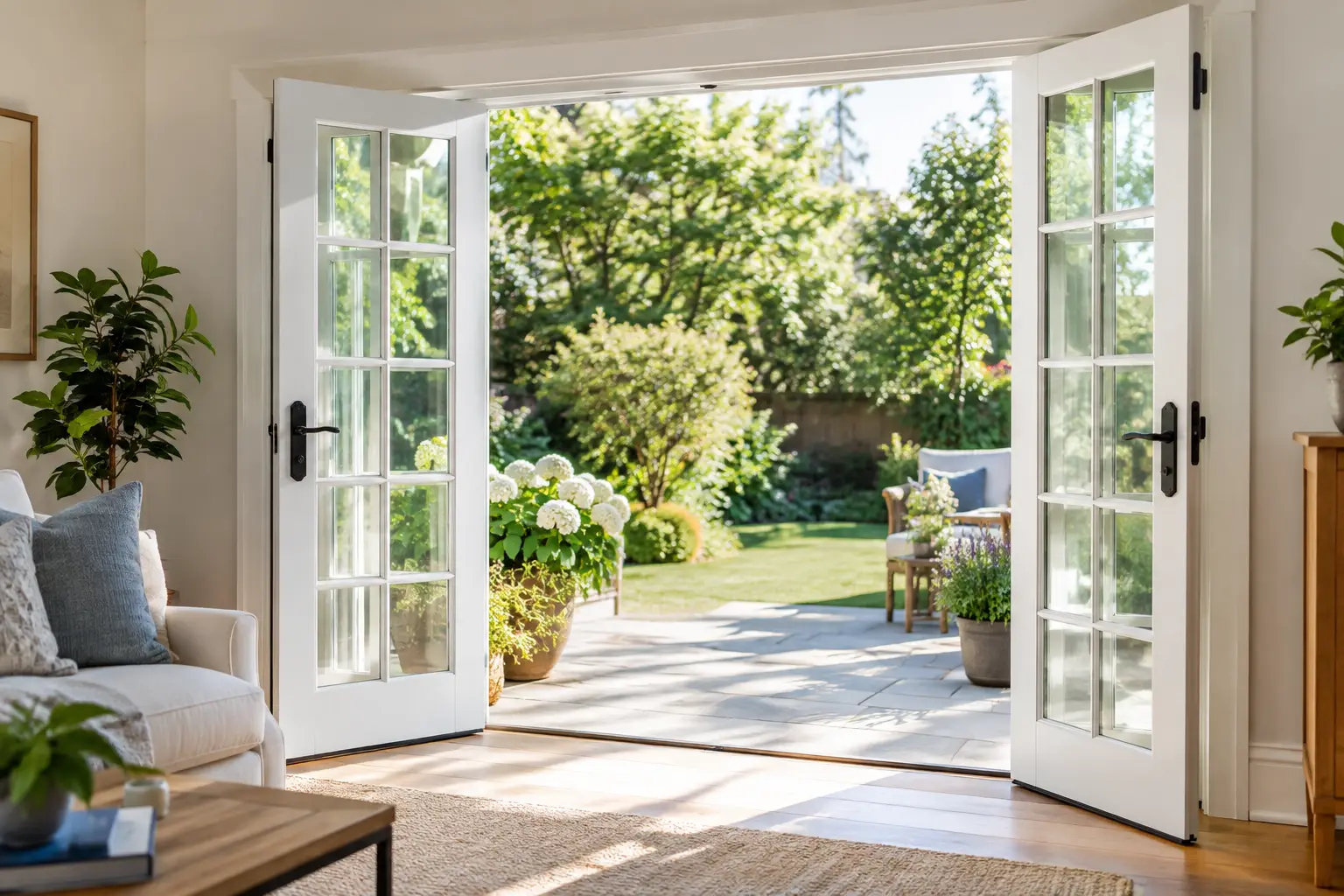
A well-positioned set of French doors can change how a room feels before you alter a single piece of furniture. They draw the eye towards the garden, welcome more natural light into the home and give you a practical second route outside for warm evenings, family gatherings and everyday ventilation.
French doors remain a popular choice because they suit far more than one type of property. They can look perfectly at home opening from a traditional dining room, a contemporary kitchen extension or a garden room. The right design is not simply about the view, however. Material, opening configuration, glazing, security and installation quality all shape how the doors perform over many years.
Why French doors work so well in British homes
French doors are formed from two glazed door leaves that meet in the centre. One door is normally used day to day, while both can be opened when you want the widest possible opening. With no fixed central post once open, they create a generous connection between indoors and out – particularly useful when carrying food to the patio or making the garden part of a social space.
Their glazed design brings daylight deeper into a room than a solid external door. This is valuable in north-facing rooms, older homes with smaller windows, and extensions where the garden-facing elevation needs to feel open rather than enclosed. It can also make a modestly sized room appear more spacious without changing its footprint.
There is a practical benefit to having two opening leaves as well. Opening one door gives convenient access, while opening both can encourage a welcome flow of fresh air through the house. In homes with young children or pets, this flexibility should be paired with suitable locking, controlled opening and careful consideration of the step out to the garden.
French doors are not always the best choice for every opening. A large uninterrupted expanse of glass may be better achieved with slimline sliding doors, while bifold doors can suit homeowners who want multiple panels folding away to one side. French doors excel when you value a classic symmetrical appearance, a clear full opening and a design that complements either period character or a more restrained contemporary scheme.
Choosing French doors for your property
The most successful installation starts with the opening and how you use the room. Think beyond the door itself: where will furniture sit, which way will each leaf open, and is there enough clear space on the patio or inside the room? An outward-opening design often preserves internal floor space, but it needs a level external area and should not obstruct a path. Inward-opening doors can be useful where the exterior is tight, provided there is room for the leaves inside.
Match the material to the home and the brief
uPVC French doors offer excellent thermal performance, low maintenance and strong value. Modern profiles are available in a broad selection of colours and woodgrain finishes, so they are no longer limited to plain white. They are a sensible choice for homeowners seeking an attractive, dependable upgrade with minimal upkeep.
Aluminium French doors are particularly well suited to contemporary extensions and properties with larger glazed areas. Their strength allows for slimmer sightlines and a crisp architectural finish, while the powder-coated surface is durable and easy to care for. Aluminium usually carries a higher initial cost, but it can be an appropriate long-term investment where design detail and longevity are priorities.
The best choice depends on the scale of the opening, your preferred appearance, budget and the surrounding windows and doors. Matching frame colours and sightlines across a project gives a more considered result than selecting each element in isolation. For heritage homes, proportions, glazing bars and colour deserve special attention so that new doors respect the property rather than compete with it.
Get the glazing right
Double glazing is the standard starting point for a comfortable, energy-efficient home, helping to reduce heat loss and cold spots near the doors. The glass specification matters just as much as the frame. Low-emissivity coatings help retain warmth, while toughened safety glass is generally required in critical locations close to floor level and within doors.
If your room faces a busy road, school route or railway line, acoustic glazing may be worth discussing. South- and west-facing rooms can benefit from solar-control glass where overheating and glare are concerns, especially in a glazed extension. These options can be valuable, but they involve a balance: glass designed to limit solar gain may slightly alter the appearance of the light or reduce useful winter warmth.
Privacy is another consideration. Clear glass preserves garden views, but obscured, decorative or integral-blind options may suit doors overlooked by neighbours. Integral blinds sit between the panes, keeping them protected from dust and avoiding the need for loose cords or fabric close to the glass.
Do not compromise on security
A garden door should be as secure as the front of the property. Look for multi-point locking, strong hinges, secure cylinders and toughened or laminated glass where appropriate. The active leaf should close firmly against a solid frame, while the secondary leaf needs dependable shootbolts to secure it at the head and sill.
Hardware has a visible role as well as a protective one. Handles, hinges and letterplate-free door panels can be chosen to complement traditional or modern architecture, but they should also be comfortable to use and built for frequent operation. A quality door that is poorly adjusted will not feel secure, so professional fitting and final checks are essential.
Consider thresholds, accessibility and drainage
The threshold is easy to overlook in a showroom and impossible to ignore once the doors are installed. A lower threshold can make access easier for prams, wheelchairs and anyone who wants a smoother transition to a patio. Yet lower levels need careful detailing to protect against wind-driven rain and surface water.
Your installer should assess existing floor levels, drainage, the patio fall and the condition of the opening before work begins. This is particularly important in older homes, where previous alterations can leave hidden issues beneath the existing frame. A careful survey helps prevent water ingress, awkward internal steps and unnecessary disruption on installation day.
Design details that make the difference
French doors can be simple and contemporary with uninterrupted panes and slim frames, or more traditional with Georgian bars and heritage-inspired hardware. The key is proportion. Narrow glazing bars can bring character to a Victorian or cottage-style property, while wider frames and excessive detailing may make a smaller opening feel busy.
Colour also changes the result considerably. Soft white remains a timeless option, anthracite grey works well with modern masonry and roof lanterns, and darker shades can give a period home a more formal finish. Consider the internal view as carefully as the external one. A frame colour that suits brickwork may feel too dark against pale walls in a compact kitchen or dining room.
For a cohesive project, plan French doors alongside nearby windows, roof glazing and garden finishes. The aim is not for every feature to match exactly, but for the lines, colours and materials to feel intentional. This is where a specialist consultation can save time and costly changes later in the project.
What to expect from a professional installation
Replacing external doors is about more than removing an old frame and fitting a new one. Accurate measuring, preparation of the opening, weatherproof sealing, frame alignment and careful adjustment all affect energy efficiency, security and day-to-day operation. The work should be completed with tidy internal and external finishing, followed by a clear handover explaining locks, keys, handles and care requirements.
For homeowners in Nottinghamshire and the surrounding counties, choosing an experienced, accredited installer offers reassurance that the project will be managed properly from survey through to aftercare. At Kingdom Architectural Glazing Systems, the focus is on helping each customer select a design that suits their property, practical needs and expected investment – not simply supplying the nearest standard size.
A well-chosen pair of French doors should feel natural from the first time you open them: secure when closed, effortless in use and perfectly framed around the part of your home you most want to enjoy. Start with the room, the garden and the way you live, then let the specification follow.
Recent News
6 October 2026
How to Choose Aluminium Bifold Doors That Last
4 October 2026
Heritage Style Aluminium Windows for Period Homes
2 October 2026
Choosing the Best Windows for Period Homes
30 September 2026
Glass Roof Versus Tiled Roof: Which Works Best?