A clear film of water on the inside of a bedroom window on a cold morning is more than an annoyance. Left unmanaged, it can mark timber, damage plaster, encourage mould and make a well-finished home feel less comfortable. This window condensation solutions guide explains what is happening, what you can do straight away and when your glazing may need closer attention.
Why condensation forms on windows
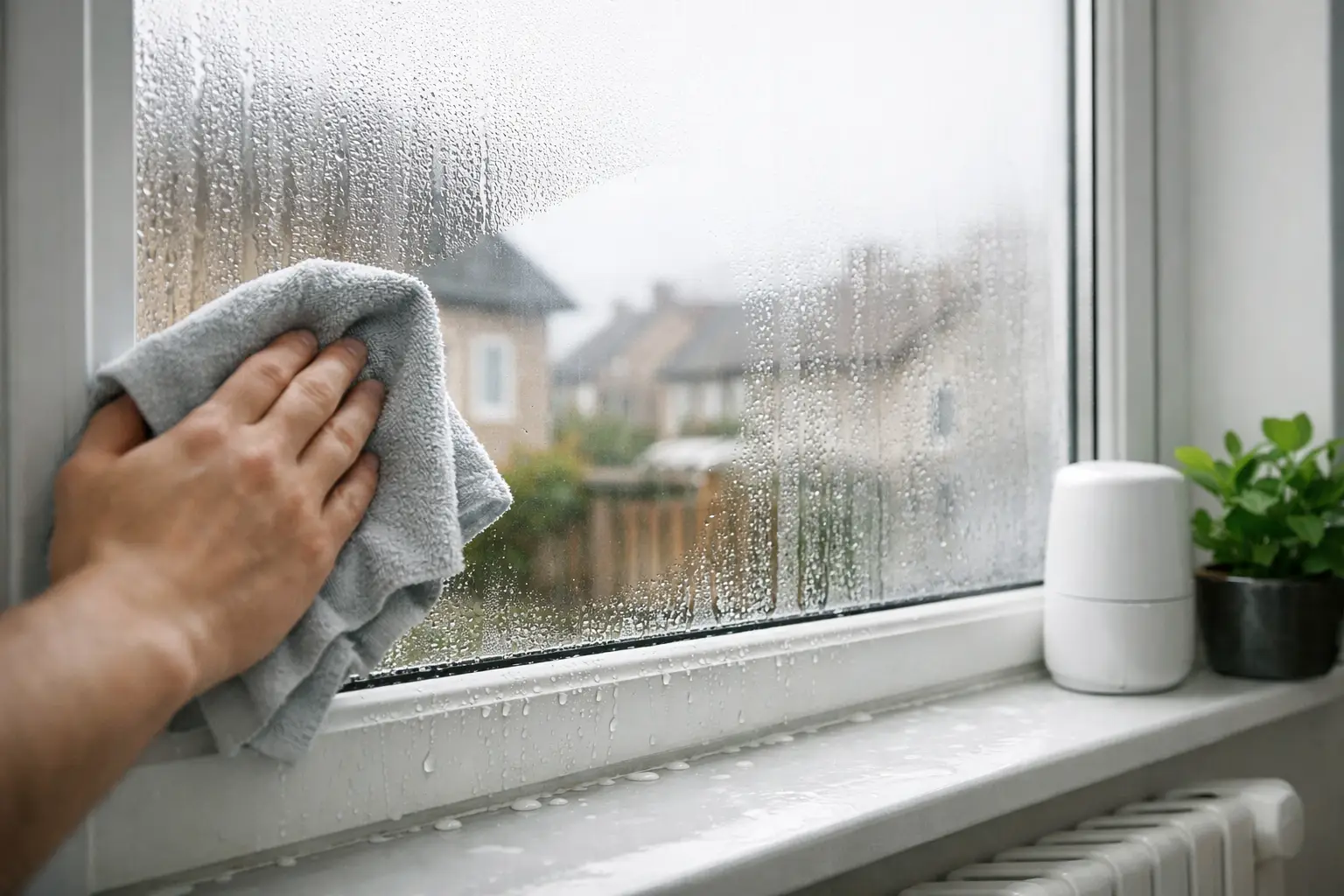
Condensation occurs when warm, moisture-laden air meets a surface that is colder than the air’s dew point. In winter, the inner pane of glass is often the coldest surface in a room, so water vapour in the air turns into droplets there first.
Daily life creates a surprising amount of moisture. Showering, cooking, drying washing indoors, boiling a kettle and even sleeping all add water vapour to the home. A busy family household can produce several litres of moisture in a day. If that moisture cannot escape and the glass surface is cool, condensation is the natural result.
The important point is that condensation is not always proof of a faulty window. It is usually a balance between humidity, ventilation, heating and the thermal performance of the glazing. The right solution depends on where the moisture is appearing.
Condensation on the room side of the glass
This is the most common form. It points to excess indoor moisture, cold glass, or a combination of both. Older single glazing and tired double-glazed units are more prone to it, but even high-performing windows can show some condensation during a particularly cold spell if a room has limited ventilation.
Condensation between double-glazed panes
Moisture trapped between panes is different. It generally means the sealed unit has failed and the insulating gas or dry air space is no longer protected from damp air. You may notice a misty appearance that cannot be wiped away from either side, sometimes with streaks or mineral marks inside the unit.
Ventilating the room will not fix this. The glazed unit, or in some cases the window, needs professional assessment and replacement.
Condensation on the outside of the glass
External condensation is often a positive sign. It can appear on efficient double or triple glazing overnight when the outer pane becomes cooler than the outside air. It usually clears as the day warms up and shows that less heat is escaping through the glass. There is normally no action required.
Start with moisture control and ventilation
For most homes, reducing indoor humidity is the first and most effective step. The aim is not to make the house draughty or cold. It is to allow moist air to leave before it settles on windows, walls and other cool surfaces.
Use extractor fans when cooking and bathing, and leave them running for a short period afterwards. A kitchen extractor should vent outside rather than simply recirculate air where possible. Keep bathroom doors closed while showering, then open a window or use the fan to clear steam. If you dry clothes indoors, choose a well-ventilated room, use a condenser tumble dryer where suitable, or consider a dehumidifier rather than placing clothes on radiators.
Trickle vents should generally be left open, particularly through the colder months. They are designed to provide controlled background ventilation without the security and weather concerns of leaving a window fully open. If your windows do not have them, opening windows briefly each day can still make a meaningful difference. A five to ten minute purge of fresh air after cooking, showering or waking up is often more useful than leaving a window slightly ajar all day.
A dehumidifier can be a valuable practical aid in homes with high occupancy, limited opening windows or regular indoor laundry. It removes moisture from the air, but it should support good ventilation rather than replace it. If the machine fills unusually quickly every day, investigate the source of moisture as well.
Keep rooms evenly heated
A colder room has colder glass and surfaces, which increases the chance of condensation. Maintaining a steady, comfortable background temperature is usually preferable to allowing rooms to become very cold and then heating them intensely for short periods.
Try not to turn off heating entirely in unused bedrooms, especially if doors are kept closed. A lower background setting can help keep surface temperatures above the point at which water condenses. Allow warm air to circulate around windows by avoiding furniture pressed tightly against them and keeping radiators reasonably clear.
Curtains and blinds add privacy and can improve comfort, but heavy coverings pulled tight against the glass may restrict airflow. Opening them during the day helps warm the internal pane with room air and lets natural light into the space. At night, avoid trapping damp air behind closed curtains if the room is already showing significant condensation.
Check the small details around your windows
A simple inspection can identify issues that are making a manageable problem worse. Wipe condensation from sills each morning to protect finishes while you address the cause. Check that drainage channels at the bottom of the frame are clear of leaves, dirt and insects, particularly on ground-floor windows and doors.
Also look for damaged seals, difficult-to-close sashes, draughts around opening sections and signs of water staining. These do not automatically mean the window needs replacing, but they are worth resolving. Correct adjustment and maintenance can improve weather resistance, security and everyday operation.
Mould around a window reveal should be treated carefully and promptly, using a product suitable for the surface and following its safety instructions. However, cleaning alone is not a cure. Unless humidity and cold-surface issues are addressed, mould is likely to return.
When better glazing is the right solution
If condensation persists despite sensible ventilation and heating habits, your current windows may be allowing the inner glass surface to become too cold. This is particularly common with single glazing, ageing double glazing, poorly fitted frames and units with failed seals.
Modern double-glazed windows use insulated glass units, low-emissivity coatings and improved frame construction to retain more warmth on the room side of the glass. Triple glazing can offer further thermal performance in the right property, although it is not automatically the best choice for every home. Frame depth, window orientation, existing insulation, ventilation strategy, budget and the appearance you want all matter.
For period properties, sliding sash or flush casement windows can provide improved energy efficiency while respecting the character of the building. For contemporary renovations, slim aluminium systems can deliver large glazed areas with strong thermal performance when correctly specified. The quality of installation is as important as the product itself: gaps, poor sealing and inadequate detailing can undermine a premium window.
If condensation is between panes, replacement is usually more straightforward than a full window upgrade. A specialist can confirm whether the frame remains sound and whether only the sealed unit needs changing. This can be a sensible route where frames are in good condition, although a wider replacement may offer better long-term value if several units are failing or the windows are otherwise outdated.
A practical window condensation solutions guide for extensions
Conservatories, orangeries and glazed extensions need particular consideration. Their large glass areas can experience greater temperature changes than the main house, while plants, wet coats and everyday living add humidity. Keeping roof vents, opening sections and trickle vents usable is essential, and a suitable roof specification can greatly improve year-round comfort.
When planning a new glazed living space, discuss ventilation and heating from the outset rather than treating them as extras. The most attractive design is one that stays comfortable on a frosty January morning as well as a bright summer afternoon. Thoughtful glazing specification helps reduce cold spots, but it must work alongside the way the room will actually be used.
Know when to seek professional advice
Arrange an assessment if you can see moisture between panes, notice repeated mould growth, have persistent condensation across several rooms, or suspect a leak rather than ordinary surface moisture. Water appearing after rainfall, concentrated staining around one opening, or damp that does not improve with ventilation can indicate a separate issue with seals, brickwork or roof detailing.
For homeowners across Nottinghamshire and the surrounding counties, Kingdom Architectural Glazing Systems can assess existing glazing and advise on replacement windows or glazed extensions that suit the property’s style and performance needs. A considered specification and professional installation provide more than a clearer view: they help protect the comfort, finish and long-term value of your home.
Start with the everyday measures, observe where and when moisture appears, and do not ignore the signs that point to failed glazing. A drier home is usually achieved through a few well-chosen improvements working together, not one quick fix.
Recent News
8 October 2026
French Doors for Brighter Garden Living Spaces
6 October 2026
How to Choose Aluminium Bifold Doors That Last
4 October 2026
Heritage Style Aluminium Windows for Period Homes
2 October 2026
Choosing the Best Windows for Period Homes