A conservatory that is bitterly cold in January and uncomfortably warm by July is rarely a problem with the room alone. In many cases, the roof is allowing too much heat to escape in winter and too much solar gain to enter in summer. Conservatory roof insulation can make a noticeable difference, but the right solution depends on the age, structure and intended use of the conservatory.
For homeowners who want to use their glazed living space every day, the aim should be more than simply making it feel warmer. A well-considered roof improvement should support comfort, control glare and noise, protect the appearance of the room and provide lasting value for the property.
What Conservatory Roof Insulation Changes
Traditional conservatories were often designed with lightweight polycarbonate or basic glazed roofs. They delivered plenty of daylight, but their thermal performance could be limited. Heat rises, so a poorly insulated roof can quickly become the main route for warmth to leave the room during colder weather.
Insulation introduces a thermal barrier between the inside of the conservatory and the external roof covering. This can help retain warmth, reduce cold spots and make the room more practical during the changing seasons. It may also soften the sound of heavy rain, which is a common concern with polycarbonate roofing.
Summer comfort matters just as much. Direct sunlight through an older roof can create intense heat and glare, particularly in south-facing conservatories. Insulation can reduce this solar gain, although it will not remove the need for sensible ventilation, shading and appropriate glazing elsewhere in the structure.
The most immediate benefit is often how the room feels. Instead of a space that is closed off for parts of the year, the conservatory can become a more reliable extension of the home for dining, relaxing, working or family life.
Is Internal Conservatory Roof Insulation the Right Answer?
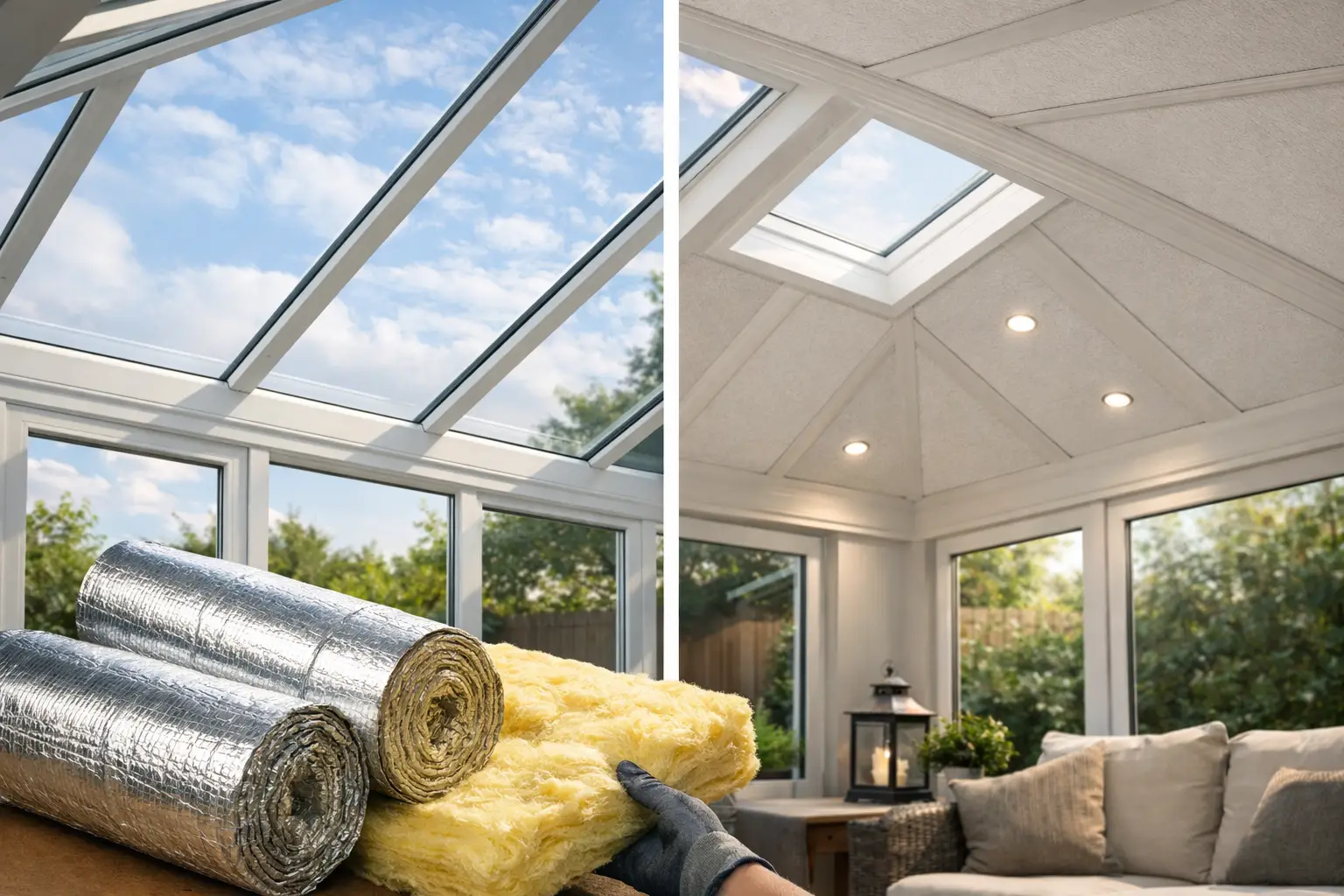
Internal insulation systems are fitted beneath the existing conservatory roof. The precise construction varies, but it typically includes insulation boards, a vapour control layer and an internal finish such as plasterboard or lightweight panels. It can be an appealing option where the existing roof structure is sound and the homeowner wants to improve comfort without a full roof replacement.
When internal insulation can work well
Internal insulation can be suitable for conservatories with an existing roof that is watertight, structurally sound and not nearing the end of its serviceable life. It can improve the appearance of a tired roof interior while reducing heat loss and excessive glare.
It may also be a practical choice when preserving the exterior appearance is important. Some properties have conservatories that sit neatly alongside period architecture, and changing the roof profile may not be the preferred design route.
The quality of the survey and installation is critical. The roof must be assessed for its ability to carry the additional weight, and the system needs to be detailed carefully around rafters, ventilation points and junctions with the house. A poorly fitted lining can conceal leaks or create condensation issues rather than resolving them.
The trade-offs to consider
There is no one-size-fits-all answer. Insulating from inside will reduce the amount of visible glass or polycarbonate overhead, so the room may feel less bright than before. For many homeowners, the increase in comfort is worth that compromise, but it is a design decision worth making consciously.
Headroom can also be reduced slightly, depending on the insulation depth and ceiling finish. In a tall conservatory this is unlikely to be significant; in a lower structure, it deserves closer attention.
Most importantly, internal insulation does not renew an ageing external roof. If glazing panels are failing, seals are deteriorating, the framework is weak or the roof has begun to leak, covering the inside may only delay a more substantial project. In these circumstances, replacing the roof is usually the better long-term investment.
When a Replacement Roof Makes Better Sense
A replacement conservatory roof gives greater freedom to improve both performance and appearance. Modern glazed roofs, tiled roofs and hybrid designs can be specified around the way the room is used, the style of the property and the amount of natural light required.
A lightweight tiled roof is often chosen by homeowners who want a more extension-like feel. With proper insulation and internal plastered finishes, it can make a conservatory feel warmer, quieter and more connected to the rest of the home. It can also transform the exterior, particularly where an old polycarbonate roof looks dated.
The trade-off is daylight. A fully tiled roof naturally admits less overhead light than a glass roof. This can be addressed with roof windows, shaped glazed panels or a hybrid roof design that balances insulated solid sections with carefully positioned glazing.
A modern high-performance glass roof may be the right option where light is the priority. Specialist roof glass can help control solar gain and improve thermal efficiency compared with older units, while retaining the open, bright character that many homeowners value. This approach works especially well when the conservatory is positioned to enjoy a garden view or when a darker adjoining room benefits from borrowed light.
The condition of the existing frames must always be considered. A replacement roof should be compatible with the conservatory base and frames, and the supporting structure must be capable of taking the new load. A professional survey should establish this before any specification is finalised.
Design Matters as Much as Insulation
The best conservatory roof is not simply the one with the thickest insulation. It is the one that suits the building, controls the practical problems of the space and looks right from both inside and out.
For a traditional property, a tiled roof in a sympathetic colour may create a more settled appearance than a highly reflective glazed structure. For a contemporary home, a slimline aluminium glazed roof or a hybrid design can complement clean lines while maintaining a strong connection to the garden.
Internally, details such as ceiling shape, lighting and ventilation affect the finished result. A vaulted ceiling can preserve a sense of volume, while integrated downlights can make the room feel more like a natural part of the home after dark. Opening roof vents and well-planned doors help release warm air when the weather changes.
It is also sensible to consider how the room will be heated. Improving the roof can reduce heat loss, but a conservatory is still a glazed space and should not be treated exactly like a solid-walled extension. The right heating approach will depend on the size of the room, its orientation, insulation elsewhere and how often it is used.
What a Professional Survey Should Assess
Before choosing conservatory roof insulation or a replacement roof, a specialist should look beyond the visible ceiling. The survey should consider the existing roof condition, frame strength, foundations, drainage, ventilation and the connection between the conservatory and the main house.
It should also establish what is causing the discomfort. A room that overheats may need solar-control glass, roof ventilation or shading as well as insulation. A cold room may have draughts around doors and windows, failed glazing seals or poor wall insulation that need attention alongside the roof.
Planning and building regulations can also affect the work, particularly where the conservatory is being altered substantially or opened into the main home. Requirements vary by project, so this should be clarified early rather than treated as an afterthought.
For homeowners across Nottinghamshire and the wider East Midlands, choosing an experienced installer means the solution can be tailored to the property rather than built around a standard package. Kingdom Architectural Glazing Systems approaches each project with that balance in mind: refined design, dependable performance and installation detail that supports the investment for years to come.
A conservatory should not be a room you work around according to the forecast. Start with an honest assessment of the existing roof, decide how you want to use the space, and choose the improvement that delivers comfort without compromising the character of your home.
Recent News
8 October 2026
French Doors for Brighter Garden Living Spaces
6 October 2026
How to Choose Aluminium Bifold Doors That Last
4 October 2026
Heritage Style Aluminium Windows for Period Homes
2 October 2026
Choosing the Best Windows for Period Homes