Your front door has to do more than look good from the pavement. It needs to keep your home secure, limit heat loss, cope with British weather and suit the character of the property. Knowing how to choose front door style, material and specification together helps you make an investment that still feels right years after installation.
How to choose a front door: begin with your home
The best front door is rarely the one that looks most impressive in a showroom. It is the one that complements your property, works with your entrance layout and delivers the level of performance your household needs.
Start by looking at the architecture of your home. A traditional Victorian, Edwardian or cottage-style property may suit a door with classic proportions, detailed glazing and a heritage-inspired colour. Flush composite designs, steel security doors and aluminium entrance doors can create a sharper, more contemporary statement for modern homes, extensions and self-builds.
Also consider the entrance itself. Is it sheltered by a porch, or exposed to driving rain? Is the hallway naturally dark? Is the doorway unusually wide or tall? These details affect the most suitable material, the need for glazed panels or sidelights, and whether a bespoke-sized door would give a more balanced finish.
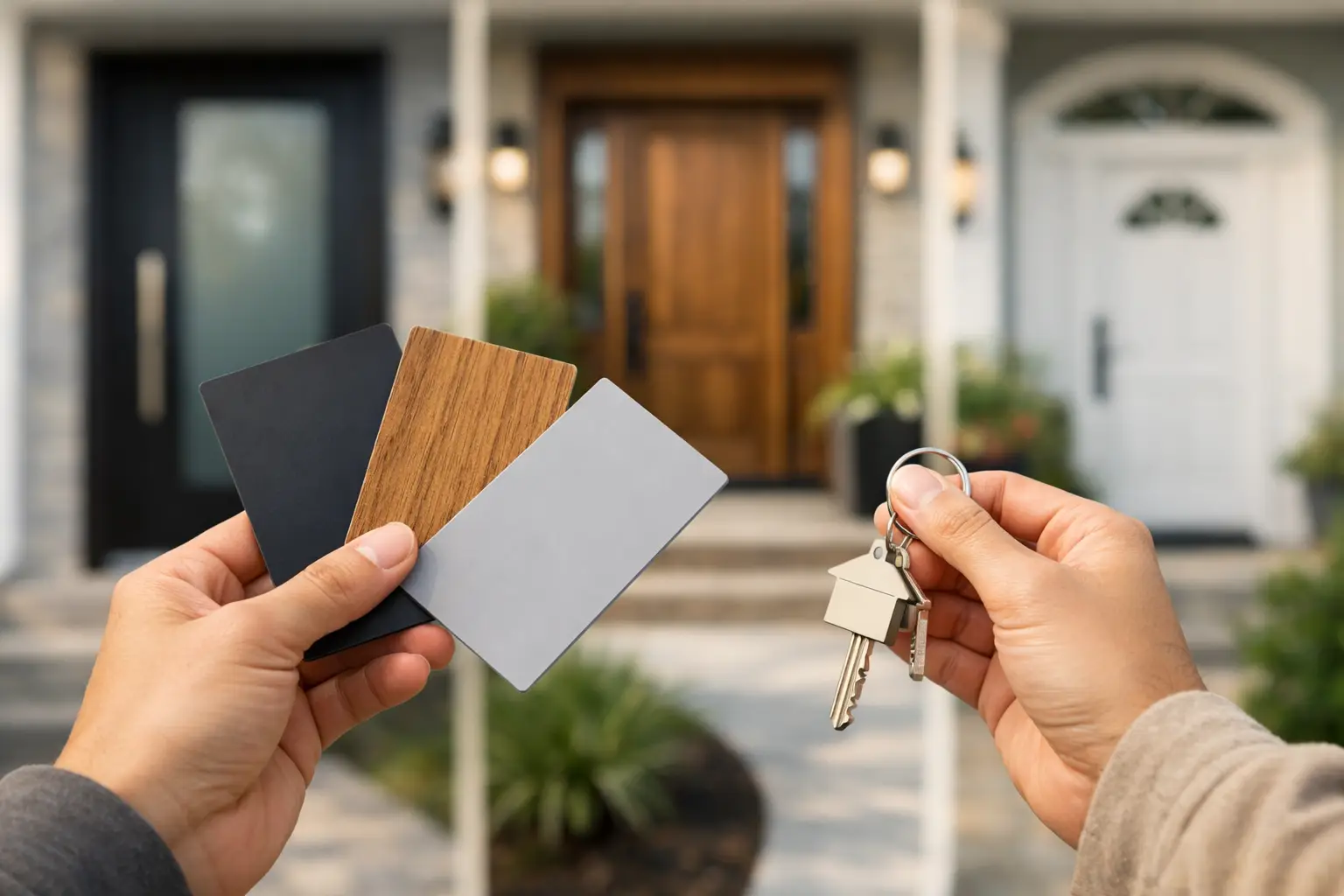
Colour matters, but it should not be chosen in isolation. Look at the brickwork, render, roof tiles, window frames and external ironmongery. Anthracite grey and black can look striking against pale render or contemporary cladding, while deep green, blue and heritage colours often bring warmth to period homes. A quality door should enhance the elevation rather than compete with it.
Choose the right door material
Material has a direct effect on appearance, maintenance, insulation, security and price. There is no single right answer, but understanding the trade-offs makes the decision clearer.
Composite doors
Composite doors are a popular choice for homeowners who want the appearance of timber with modern thermal and security benefits. Their layered construction typically combines an insulating core with durable skins and a reinforced frame, producing a solid-feeling door that is designed to resist warping, fading and everyday knocks.
They are available in a broad range of traditional and modern designs, including woodgrain finishes and realistic panel detailing. This makes them particularly versatile for renovation projects where kerb appeal matters. Maintenance is straightforward, usually requiring only occasional cleaning and checks to the hinges, seals and hardware.
The specification can vary considerably between products. A lower-priced composite door may not offer the same thickness, reinforcement, locking system or finish quality as a premium option, so compare the whole construction rather than judging by appearance alone.
Aluminium entrance doors
Aluminium doors are well suited to contemporary homes and projects where clean lines, large formats and a refined architectural finish are priorities. The material is strong, stable and low-maintenance, allowing for slim, precise profiles and premium powder-coated colours.
A well-specified aluminium door can provide excellent insulation and weather resistance, particularly when it includes a thermal break and high-quality seals. It is also a strong option for exposed locations because it will not swell or rot as timber can.
Aluminium generally sits at a higher price point than standard composite options. For a design-led renovation or a home with aluminium windows, bifold doors or slimline sliding doors, however, it can create a cohesive and valuable result.
Steel security doors
Steel entrance doors offer exceptional strength, making them a compelling option where security is the leading concern. Their solid construction and robust locking arrangements can provide reassurance for homes in isolated locations, high-value properties or commercial settings.
Modern steel doors are not limited to an industrial appearance. They can be finished in a wide choice of colours and styles, with glazing incorporated where appropriate. Their weight and performance mean that accurate surveying and expert installation are especially important.
Timber doors
Timber brings natural character that is difficult to replicate, especially on listed, period or countryside properties. A properly made and maintained timber door can be beautiful and long-lasting, but it needs regular care to protect it from moisture and sun exposure.
For some homes, that maintenance is a worthwhile part of preserving an authentic appearance. For others, a high-quality composite door with a timber-effect finish provides a more practical balance of traditional style and reduced upkeep.
Put security before decorative details
A beautiful door should never be a weak point in the home. Look beyond a stylish handle or impressive-looking lock and ask how the whole door set performs. The door leaf, frame, hinges, cylinder, multipoint lock and glazing all need to work together.
For added confidence, look for products tested to recognised security standards such as PAS 24, along with a high-security multipoint locking system. A quality cylinder should offer protection against common methods of forced entry, while hinges should be secure and designed to prevent the door being lifted from the frame.
Glazed panels can bring valuable daylight into a hallway, but they should use toughened or laminated safety glass in appropriate locations. Obscure or decorative glass is often a good solution where you want light without giving a clear view into the property.
Remember that security relies on fitting as much as product choice. Even the most capable door will underperform if it is poorly aligned, inadequately fixed or installed with gaps around the frame. Choose an experienced installer that takes surveying, fitting and final adjustment seriously.
Consider warmth, weather resistance and noise
The front door is one of the first barriers between your home and the elements. A draughty, poorly fitted door can make the hallway uncomfortable and contribute to heat loss, even if the rest of the property has been upgraded.
Compare U-values, which indicate how readily heat passes through the door. Lower figures generally mean better thermal performance, but it is sensible to assess the full door set, including frame, threshold and glazing. A well-insulated core is valuable, yet it needs effective seals and professional installation to make a noticeable difference.
If your home is on a busy road or close to regular traffic, sound reduction may also influence your choice. A solid door construction, good seals and suitable glazing can help reduce external noise. This is particularly useful for homes where the entrance hall opens directly into the main living space.
Weather performance deserves attention too. Doors facing prevailing wind and rain need reliable drainage, durable finishes and properly compressed seals. Ask how the proposed product is designed to handle exposure, rather than assuming every entrance door is suited to every location.
Get the glazing and hardware right
Door furniture changes the character of a front door quickly. A traditional knocker and letterplate can suit a classic panelled design, while a long pull handle and concealed or minimalist hardware can work well with a contemporary aluminium door.
Think practically about how the door will be used. Families carrying bags, pushchairs or shopping may value a handle arrangement that is easy to operate. If the entrance is used frequently after dark, consider integrated lighting, a door viewer or a smart access option where appropriate.
Glazing should be chosen for both light and privacy. A solid door can feel suitably private and substantial, but sidelights or a glazed top panel can transform a dark hallway. Decorative, frosted or reeded glass can soften the view while allowing daylight through. The glass design should relate to the style of your windows and the age of the property.
Do not overlook measurements and installation
A front door is not a one-size-fits-all purchase. The opening may have moved over time, the threshold may be uneven, or the existing frame may conceal issues that only become clear during survey. Accurate measurements are essential, especially where you are replacing a non-standard door or incorporating sidelights and overhead glazing.
A professional survey should consider access, surrounding brickwork, internal finishes, drainage, threshold height and any requirement for improved accessibility. It should also establish whether the door will meet relevant building regulations for thermal performance and safety glazing.
This is where a consultative installation service offers genuine value. At Kingdom Architectural Glazing Systems, the focus is on matching a premium door solution to the property rather than forcing a standard product into the opening. The final result should look considered, close cleanly, seal correctly and perform as intended from day one.
Set a budget around long-term value
It is tempting to compare front doors only by their initial price, but this can be misleading. A door that needs repainting, adjustment or early replacement may cost more over time than a higher-quality alternative with stronger construction, better seals and a more durable finish.
Ask what is included in the quotation: surveying, removal of the existing door, disposal, trims, hardware, glazing, installation, guarantees and aftercare all matter. A clear specification makes it easier to compare like for like and avoids unwelcome compromises late in the project.
The right front door should give you a small moment of confidence every time you come home. Choose one that reflects your property, protects the people inside it and is fitted with the care a prominent part of your home deserves.
Recent News
8 October 2026
French Doors for Brighter Garden Living Spaces
6 October 2026
How to Choose Aluminium Bifold Doors That Last
4 October 2026
Heritage Style Aluminium Windows for Period Homes
2 October 2026
Choosing the Best Windows for Period Homes