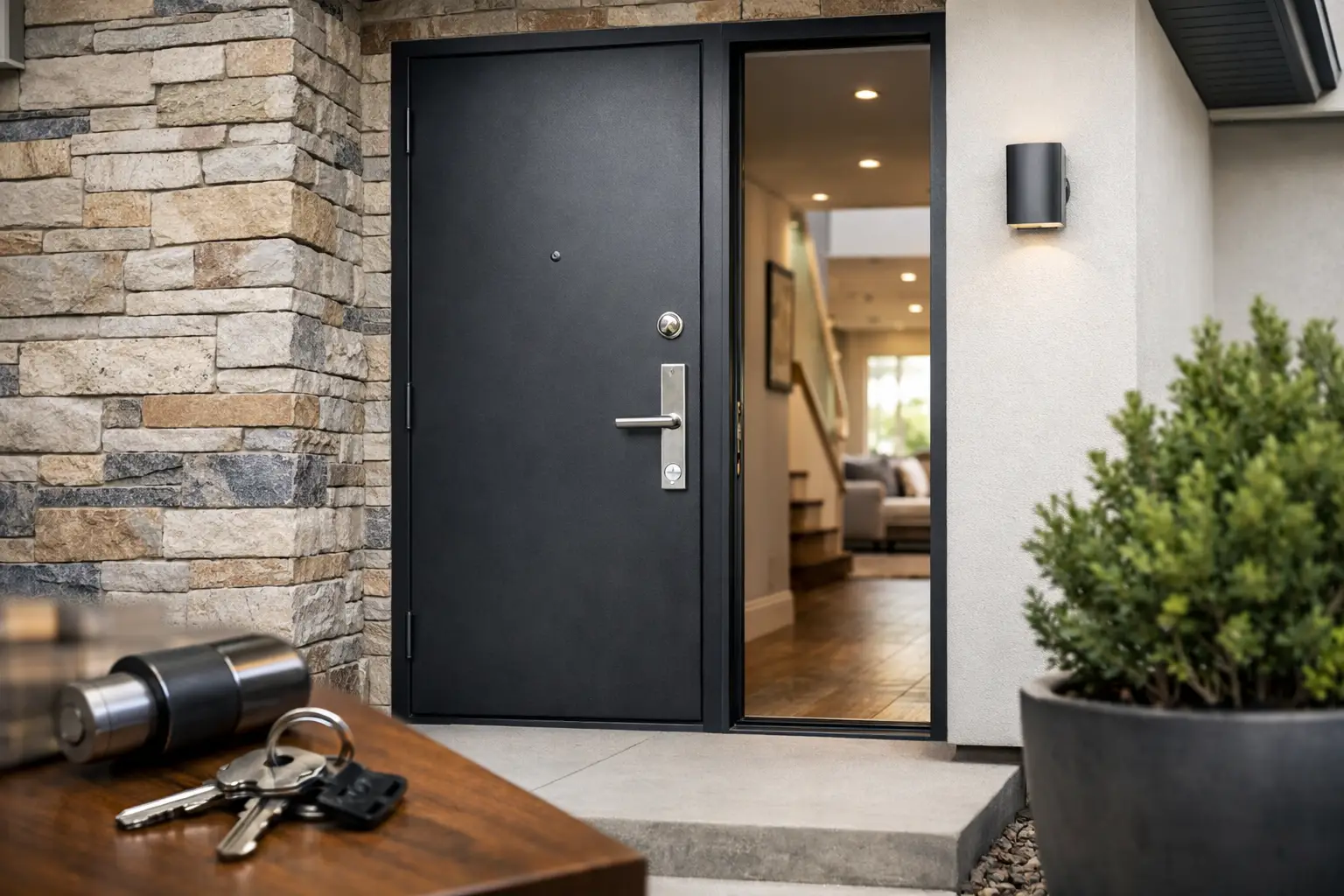
A front door has a difficult job. It needs to make the right first impression, protect the people and belongings inside, cope with daily use and help keep heat where it belongs. Steel security doors for homes are increasingly chosen by homeowners who do not want to compromise on any of those priorities.
Once associated mainly with commercial premises, modern steel doors can be tailored for period properties, contemporary extensions and design-led self-builds alike. The question is not simply whether steel is strong. It is whether the door is properly specified, professionally fitted and suited to the way your home is used.
Why choose steel security doors for homes?
Steel provides an exceptionally solid foundation for a secure entrance. Its inherent strength makes it difficult to force, bend or damage, while a carefully engineered frame, locking system and hinges create a complete door set designed to resist attack. This matters because a secure door is only as capable as its weakest component.
For homeowners, that strength also brings a reassuring sense of permanence. A quality steel entrance door feels substantial when it closes and is built to withstand years of regular use, changing weather and the occasional knock from school bags, prams or deliveries.
Security does not need to result in an industrial-looking entrance. Contemporary steel security doors are available in a wide choice of colours, finishes, panel layouts and glazing options. A slim glazed section can bring daylight into a hallway, while solid panels offer a more private, architectural appearance. The right design can complement a heritage-style renovation just as successfully as a crisp, modern façade.
Security is about the whole door set
It is tempting to compare doors by material alone, but the performance of an entrance door relies on several elements working together. The steel leaf, frame, hinges, cylinder, lock and installation all deserve attention.
The frame and fixing method
A strong door fitted into a poorly prepared opening will not offer the protection it should. The frame must be correctly measured, secured to sound surrounding structure and aligned so the door closes evenly. Gaps, movement and poor fixings can affect both security and weather performance.
This is one reason a survey-led installation is so valuable. An experienced installer will assess the existing opening, identify any building work required and specify a solution that works with the property rather than simply placing a standard door into a non-standard space.
Locks, cylinders and hinges
Multipoint locking systems secure the door at several positions around the frame, rather than relying on a single central lock. High-quality cylinders can also help protect against common methods of forced entry. On outward-opening doors, security hinges and hinge-side protection are particularly important.
Ask about the locking specification in straightforward terms. You should understand how the door locks, what keys or access options are supplied, and how replacement keys or future maintenance will be handled. For some households, a traditional key is ideal. Others may prefer a compatible smart access solution, provided it does not distract from the core mechanical security of the door.
Glazing without unnecessary compromise
Glazing can make a hallway feel brighter and more welcoming, but it must be specified with security in mind. Toughened or laminated glass, secure beads and an appropriate glazed design all have a role to play. The position of the glazing also matters. A narrow vertical panel can offer light and a clear visual feature while retaining privacy and reducing sightlines into the home.
Thermal performance matters as much as strength
Older steel doors earned a reputation for feeling cold, largely because metal conducts heat. Modern residential steel door systems address this through insulated cores, thermally improved profiles, effective seals and carefully designed thresholds.
The result can be a door that feels secure and substantial without creating a cold spot at the front of the house. Exact thermal performance varies by product, size, glazing and configuration, so it is worth comparing whole-door figures rather than focusing on a single component. The quality of fitting is equally relevant: draughts around a door are often caused by inaccurate installation or worn seals, not the door material itself.
For homes in Nottinghamshire and across the East Midlands, where exposed entrances can face wind and driving rain, weather sealing should be part of the conversation from the outset. A well-specified threshold and drainage detail can make a noticeable difference to comfort near the entrance.
Design choices that change the result
A steel security door should enhance the elevation of your property, not look like an afterthought. Before choosing a style, consider the scale of the entrance, the amount of natural light in the hall and the materials already used around the front of the home.
A dark, matt finish can suit contemporary brickwork, render and aluminium window frames. Softer heritage tones may work better with traditional brick, stone or period detailing. If the home has a large entrance opening, side panels or an over-panel can create a more balanced composition, although they need to be designed as securely and efficiently as the main door.
Handle choice also has a surprisingly large visual impact. A long pull handle can give a contemporary door a confident, architectural look, while more traditional hardware may be right for a classic property. Think about daily practicality too. A handle that looks impressive should still be comfortable for children, visitors and anyone carrying shopping through the door.
The trade-offs to consider before buying
Steel is a premium option, and it will not be the best fit for every project. It generally costs more than a basic uPVC entrance door, and bespoke designs, decorative glazing or complex structural openings will increase the overall investment. The weight of the door also means fitting needs to be handled carefully by a competent team.
There are occasions where a composite door may be the more appropriate choice, particularly where a homeowner wants a traditional timber-effect appearance at a different budget point. Aluminium can also suit certain contemporary schemes, especially when matching other aluminium glazing. The best material depends on your priorities for security, aesthetics, thermal performance and the character of the property.
Steel can be a particularly strong choice when you want a distinctive entrance with a high level of physical security, fine design detail and long-term durability. It is also well suited to wide or tall bespoke openings where a more substantial door system is needed.
What to ask at survey stage
A good consultation should leave you with clear answers, not a list of technical terms. Discuss the security and locking arrangement, the thermal specification, threshold detail, finish, glazing, lead time and warranty. If the door is part of a wider renovation, consider it alongside windows, side panels, porch glazing and external lighting so the finished elevation feels considered.
It is also sensible to ask who will carry out the installation and what happens after fitting. Accurate surveying, careful protection of the home during works and responsive aftercare are part of the value of choosing a specialist rather than treating a front door as an off-the-shelf purchase.
Kingdom Architectural Glazing Systems works with homeowners who want that joined-up approach, helping to match premium door solutions to the style, performance needs and practical demands of each project.
A door worth specifying properly
The most successful entrance doors do more than deter intrusion. They make arriving home feel better, reduce unwanted draughts and give the property a finish that remains convincing year after year. Steel offers a compelling combination of strength and design freedom, but the final result depends on specification and installation as much as the material itself.
If you are planning an entrance upgrade, bring photographs, approximate dimensions and a clear view of how you want the front of your home to feel. A detailed survey and informed conversation will help turn a security priority into an entrance that genuinely adds value to everyday living.
Recent News
8 October 2026
French Doors for Brighter Garden Living Spaces
6 October 2026
How to Choose Aluminium Bifold Doors That Last
4 October 2026
Heritage Style Aluminium Windows for Period Homes
2 October 2026
Choosing the Best Windows for Period Homes