Your front door has a demanding job. It needs to make the right first impression, stand up to wet winters and daily use, help keep heat inside, and provide genuine peace of mind when you lock up at night. When weighing up a composite door vs uPVC door, both can be excellent choices, but they suit different priorities, properties and budgets.
For homeowners investing in a renovation, extension or a full property refresh, the decision often comes down to the balance between appearance, performance and long-term value. Here is how each option compares in the areas that matter most.
Composite door vs uPVC door at a glance
A uPVC door is made primarily from unplasticised polyvinyl chloride, usually with an insulated core and an internal steel reinforcement where needed. It is a familiar, cost-effective choice, available in a wide variety of glazed and solid-panel designs.
A composite door combines several materials to create a thicker, more substantial door slab. Its construction commonly includes an insulated core, a durable outer skin and reinforced sections designed to improve strength and stability. The result is a door intended to deliver the traditional character of timber alongside modern thermal and security performance.
Neither material is automatically right for every home. A well-specified and professionally installed uPVC door can be a very practical upgrade, while a composite door is often the preferred choice where a more premium finish and enhanced performance are priorities.
Appearance and kerb appeal
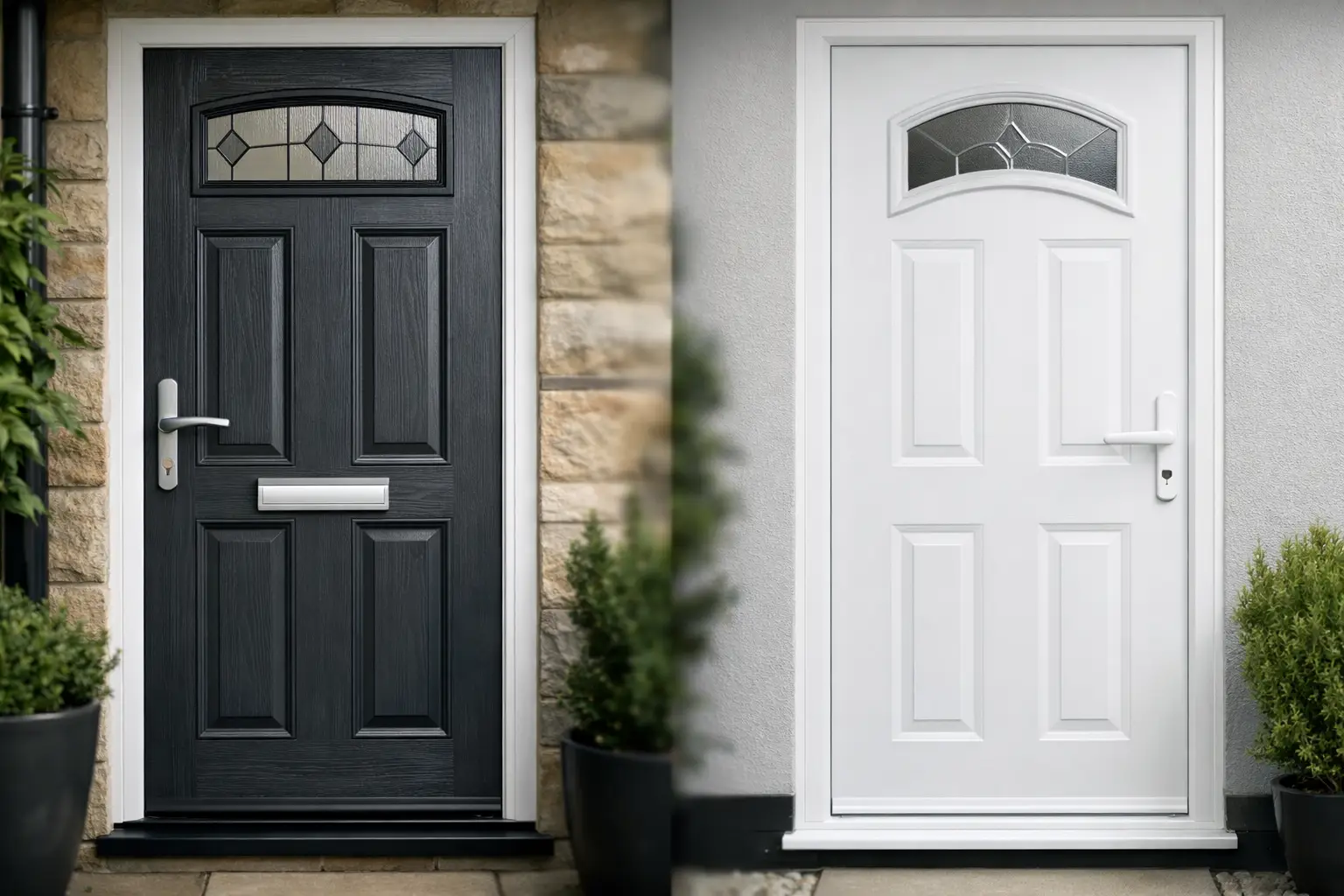
The visual difference is usually the first thing homeowners notice. Composite doors tend to have a deeper, more solid profile, with convincing woodgrain finishes, moulded panels and decorative glazing options. They can suit period cottages, traditional family homes and modern properties equally well, depending on the chosen design and colour.
This breadth of styling is particularly useful when the entrance needs to complement new windows, a porch, or an extension. Colours such as anthracite grey, black, deep blue and heritage green can give a contemporary or classic feel without the regular painting associated with a timber door. A realistic woodgrain finish can also work well where planning considerations or the character of the street call for a more traditional look.
uPVC doors have come a long way from the plain white styles many people remember. Modern options are available in coloured finishes, wood-effect foils, varied panel arrangements and decorative glass designs. They can look smart and tidy, especially on newer homes or rental properties where a straightforward, low-maintenance solution is the aim.
That said, composite doors generally offer greater visual depth and a more premium entrance. If kerb appeal is central to the project, this can make the additional investment worthwhile.
Security and everyday reassurance
The front door is a major part of your home security, so the door material is only one part of the picture. The frame, hinges, cylinder, locking system and quality of installation all matter.
Composite doors are naturally well suited to security-focused specifications because their thicker, reinforced construction provides a strong foundation for multi-point locking and high-security hardware. When paired with a suitable frame, reinforced hinges and a quality cylinder, they can provide a very reassuring barrier against forced entry.
uPVC doors can also offer dependable security. Most modern systems use multi-point locks and reinforced frames, and are a significant improvement on older, poorly fitted doors. However, the lighter construction can feel less substantial than a composite door, particularly on larger or frequently used entrance doors.
For either option, avoid judging security by appearance alone. Ask what locking cylinder is included, whether anti-snap protection is available, how the hinges are secured, and whether the complete door set has been tested to recognised security standards. A premium lock fitted to the right door is far more valuable than an attractive panel with basic hardware.
Thermal efficiency and comfort
A draughty old front door can make a hallway feel cold even when the heating is on. Both composite and uPVC doors use insulated cores and weather seals to reduce heat loss, and either can make a noticeable difference compared with an ageing timber or single-glazed entrance door.
Composite doors are typically thicker and often achieve strong thermal performance because of their insulated core and close-fitting seals. Their solid construction can also reduce the cold spots and rattles sometimes associated with older doors. This helps create a more comfortable entrance area and may support lower heating demand over time.
A quality uPVC door can also perform very well, particularly when it is made to measure and fitted correctly. The stated U-value is useful for comparing products, but it should not be the only deciding factor. Glazed sections, threshold design, frame specification and installation all influence how the completed door performs in your home.
If energy efficiency is a key objective, discuss the complete door specification rather than simply choosing a material. The best result is a correctly measured, well-sealed door that suits the exposure of your property.
Maintenance, durability and weather resistance
Both door types are designed to make life easier than traditional timber. They do not need annual sanding, staining or painting, and routine care is usually limited to cleaning the surface, checking seals and keeping drainage channels clear.
Composite doors have an advantage in terms of their substantial feel and resistance to everyday knocks. Their outer skin is designed to cope with changing weather, while the internal structure helps the door hold its shape. This can be valuable on an exposed elevation, where strong sun, wind and driving rain place greater demands on the entrance.
uPVC is also highly weather-resistant and easy to look after. It will not rot and is a sensible option for busy households looking for a practical replacement door. Over many years, however, cheaper products may be more prone to discolouration, movement or a tired appearance, especially if they face prolonged direct sunlight. Product quality and fitting standards make a real difference here.
Whichever door you choose, wipe it down with mild soapy water rather than abrasive cleaners, lubricate moving hardware as advised, and act quickly if you notice a stiff lock or damaged seal. Small maintenance checks protect both performance and warranty cover.
Cost and long-term value
uPVC is usually the more affordable option upfront. For homeowners replacing several windows and doors at once, or improving a property to a defined budget, this can free up funds for other important work. A well-made uPVC entrance door remains a sound choice when selected with good glazing, hardware and a secure locking system.
Composite doors generally cost more because of their construction, thickness, finish options and higher-spec hardware. The price can rise further with sidelights, decorative glass, unusual colours, bespoke sizing or enhanced security features.
The question is not simply which door costs less on installation day. Consider how long you expect to stay in the property, how visible the entrance is, and what matters most to you. A composite door may offer stronger kerb appeal and a more premium feel that supports the overall presentation of a well-kept home. For a side entrance, utility room or budget-led project, a uPVC door may deliver everything required at a lower cost.
Which door is right for your home?
Choose a composite door if you want a statement entrance, a substantial feel, wide design choice and high levels of security and insulation. It is particularly well suited to a main front door, character property renovation, or a project where windows, glazing and architectural details have been carefully considered together.
Choose a uPVC door if you want a dependable, low-maintenance solution with a more accessible initial cost. It can be an excellent option for secondary entrances, newer homes and practical upgrades where simple styling and good everyday performance are the priorities.
There is also a middle ground. A high-specification uPVC door may be better than a poorly specified composite door, so compare like for like. Look beyond headline prices and assess the door slab, frame, glazing, locks, hinges, threshold, guarantees and installation expertise.
At Kingdom Architectural Glazing Systems, the most useful starting point is often to see door styles and finishes in context with the property. A considered choice should suit the architecture, meet your security and thermal requirements, and still feel right every time you come home. The right entrance door is not just a replacement item – it is a lasting part of how your home looks, feels and performs.
Recent News
8 October 2026
French Doors for Brighter Garden Living Spaces
6 October 2026
How to Choose Aluminium Bifold Doors That Last
4 October 2026
Heritage Style Aluminium Windows for Period Homes
2 October 2026
Choosing the Best Windows for Period Homes