A new aluminium window should make a room feel better from the first cold morning after fitting: warmer near the glass, quieter beside the road and brighter without bulky frames interrupting the view. Aluminium window installation is what turns those expected benefits into a lasting result. The quality of the survey, specification and fitting matters just as much as the frame itself.
For homeowners investing in a renovation, extension or replacement programme, aluminium offers a distinctive combination of slim sightlines, strength and long-term durability. It can suit a sharp contemporary build, but the right frame design and colour can also bring a confident, refined finish to a more traditional property. The key is choosing a solution that works for the building, rather than selecting on appearance alone.
What aluminium window installation involves
A professional installation begins well before an existing window is removed. The opening must be measured accurately, assessed for its condition and matched with an appropriate window system. This is particularly important in older homes, where walls and reveals are not always square, level or consistent in depth.
The survey should establish more than width and height. An experienced installer will consider the wall construction, existing lintels, external finishes, internal reveals, drainage requirements, access and the relationship between the new windows and any neighbouring doors, rooflights or glazing. These details influence how the windows are manufactured and fitted, and how clean the completed result will look inside and out.
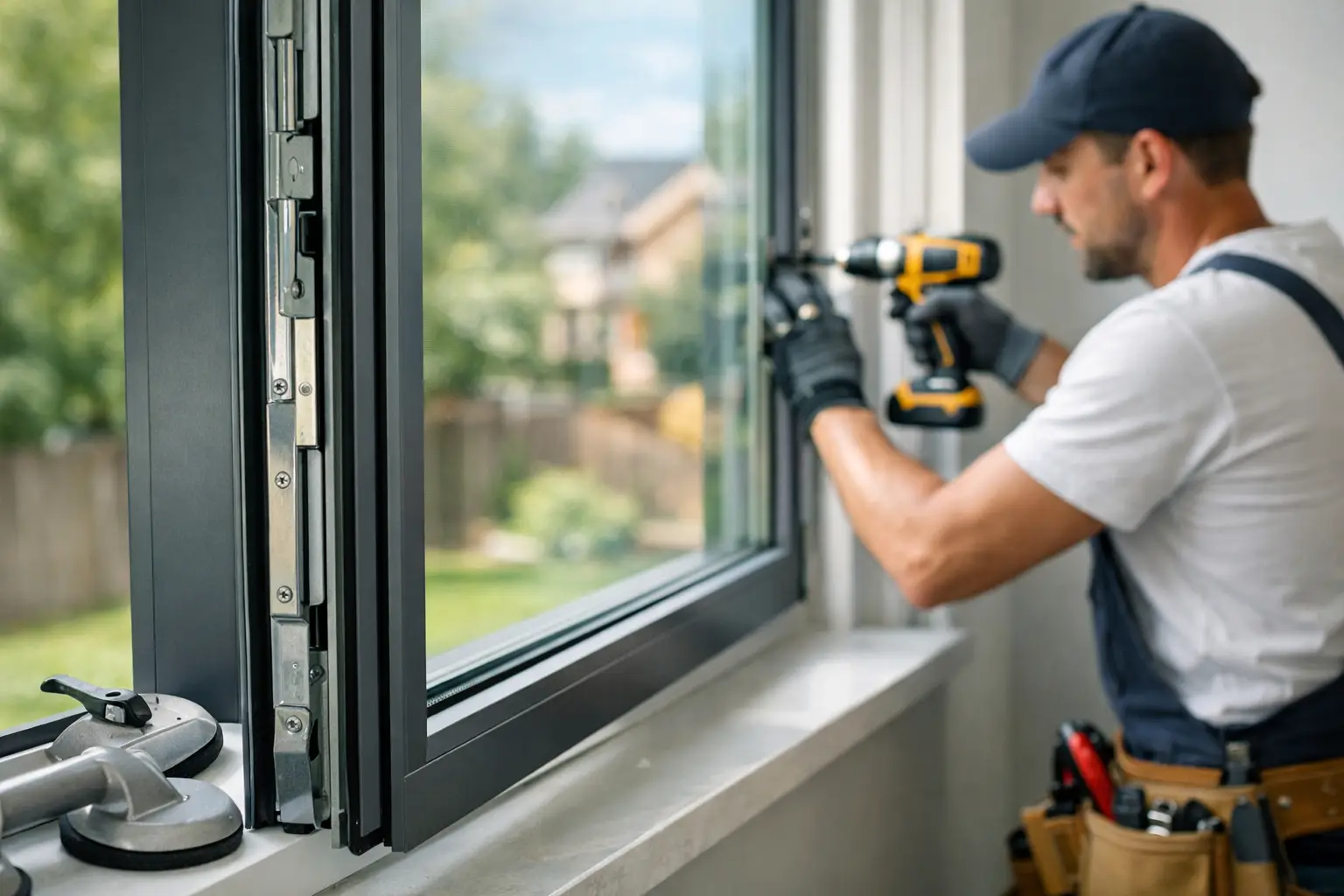
Once the design is agreed, windows are made to the required sizes and configuration. On installation day, the team will protect the working area, carefully remove the old units and prepare each opening. The new frames are positioned, packed and fixed so they are level, plumb and correctly aligned. They are then insulated and sealed to manage draughts and weather exposure, before glazing, trims and finishing touches are completed.
A well-organised installation also includes checking that every sash opens smoothly, locks securely and drains as intended. It is not simply a case of fitting a frame into a gap. It is detailed work that protects the performance, appearance and service life of your investment.
The specification should suit your home
Aluminium frames are strong, which allows for slimmer profiles and generous panes of glass. That is a major reason they are popular for extensions and feature elevations where natural light and clean lines are priorities. However, slim does not mean that every frame is right for every opening.
Larger fixed panes can create an impressive outlook, but glass weight, wind loading and the structure around the opening must be considered. Opening windows need to balance ventilation, easy use and sightlines. A top-hung casement may be ideal where regular ventilation is needed without taking up internal space, while a side-hung arrangement can offer a more familiar operation and wider opening where appropriate.
Colour is another decision that deserves care. Anthracite grey and black remain popular for modern homes, while softer greys, whites and heritage-inspired colours can sit more comfortably with period brickwork. Powder-coated aluminium provides a durable finish, but it is worth viewing samples against your brick, render or cladding in natural light. A colour that looks excellent in a showroom can appear quite different on a north-facing elevation.
Glazing choices should be made alongside the frame choice. Double glazing is suitable for many replacement projects, while triple glazing can be beneficial in specific locations or highly energy-conscious schemes. It is not automatically the best option in every case: it adds weight and can affect cost, profile selection and solar gain. The orientation of the room, amount of existing shade and how the space is used all matter.
Thermal performance depends on the whole installation
Modern aluminium windows use thermally broken profiles to reduce the transfer of heat through the frame. Combined with high-performing sealed units, this helps create a more comfortable internal environment and can reduce heat loss compared with older, poorly performing windows.
Yet thermal performance is not defined by the glass alone. Gaps around a frame, poor sealing or inadequate insulation at the perimeter can undermine a good product. The joint between the window and the building needs to be treated with the same care as the window itself. Internal finishing should provide an effective air seal, while external detailing should resist wind-driven rain without trapping water.
This is especially relevant in exposed locations across Nottinghamshire, Lincolnshire, Derbyshire and the wider East Midlands, where weather can be changeable and driving rain is not unusual. Correct drainage paths and neat, durable external seals help the installation cope with the conditions it will face year after year.
Security is designed in, then checked on site
Aluminium is naturally strong, but a secure window is the result of the full system: frame, glazing, locks, hinges, handles and fitting. Multi-point locking, internally beaded glass and quality hardware all contribute to a window that feels solid and reassuring in daily use.
During the survey, it is sensible to discuss ground-floor openings, windows near flat roofs and any locations that could be easier to access. Restrictors may be useful for upper-floor rooms or family homes, while locking choices and handle finishes can be matched across the property for a more considered result.
The final checks matter. Windows should close without excessive force, handles should operate properly and keys should be handed over with clear guidance. If an opening catches or feels misaligned, it should be adjusted before the installation is signed off, not left for later.
Plan for the practical side of fitting day
Most replacement work creates some disruption, even with an experienced team. Removing old frames can produce dust and noise, and each opening will be temporarily exposed while work is underway. A good installer will explain the expected programme, protect floors and furnishings where necessary, and keep the property secure throughout the day.
You can help the work run smoothly by moving ornaments, curtains and furniture away from the windows before the team arrives. Consider parking arrangements, access to the property and whether children or pets need to be kept away from the work area. If you are replacing several windows, ask how the work will be phased so you know which rooms will be affected and when.
Weather can occasionally alter the schedule, particularly for complex projects or large openings. This is not a sign of poor planning. It is better to protect the building and achieve a proper finish than rush a critical stage in unsuitable conditions.
Choose an installer, not just a product
Two aluminium windows may look similar in a brochure, but the outcome can be very different depending on the survey, installation standards and aftercare behind them. Look for clear quotations that explain what is included, from frame colour and glazing specification to trims, making good and waste removal. Ask who will carry out the fitting and how issues or adjustments are handled after completion.
Accreditations provide useful reassurance. FENSA registration, for example, demonstrates that replacement window work is completed in line with relevant building regulations and that the appropriate certification process is in place. Experience with both straightforward replacements and more detailed architectural glazing projects is equally valuable, particularly where new windows need to integrate with doors, extensions or altered openings.
At Kingdom Architectural Glazing Systems, the focus is on helping homeowners make decisions that suit the property as well as their priorities. That may mean prioritising ultra-slim sightlines for a new extension, selecting a sympathetic finish for a character home or improving comfort and security across a full-house replacement.
A finish you will notice every day
After installation, take time to inspect the work in daylight. Look at the external lines of the frames, the consistency of the seals and the condition of the internal finishes. Open and close each window, check the locks and ask any questions before the installers leave. Keep your product information, guarantees and keys somewhere safe for future reference.
Aluminium windows need little routine maintenance, but an occasional clean with mild soapy water and a soft cloth will keep frames looking their best. Avoid abrasive cleaners, and clear any visible drainage channels of debris. If hardware ever becomes stiff or a seal appears damaged, arrange an inspection rather than forcing the mechanism.
The best aluminium window installation does not demand attention once it is complete. It simply gives your home cleaner lines, more light, reliable security and comfort that holds up through every season.
Recent News
25 August 2026
How to Plan Bifold Doors for a Better Home
23 August 2026
Do Bifold Doors Add Value to Your Property?
21 August 2026
Options For Replacement Windows In Southwell, Nottinghamshire
21 August 2026
How to Soundproof Windows Without Losing Light