A window can look perfectly sound while still allowing the rush of traffic, early deliveries or a neighbour’s lawnmower straight into the room. The reason is usually simple: sound finds its way through air gaps and vibrating glass. Learning how to soundproof windows means addressing both, without sacrificing the natural light and appearance that made you choose glazing in the first place.
For homeowners near busy roads, rail routes or lively town centres, the right improvement can make bedrooms calmer, home offices more productive and living spaces far more relaxing. The best answer depends on the condition of the existing frames, the type of noise and whether you are planning a wider renovation.
Start by finding where the noise enters
Before replacing a window, inspect it closely on a quiet day. Stand near the frame and listen for changes in sound around the opening sash, trickle vents and joins between the frame and wall. A noticeable draught is a useful clue – where air can pass through, noise can pass through too.
Older windows often have worn seals, poorly adjusted hinges or small gaps around an opening sash. These faults may seem minor, but even a narrow gap can undermine the performance of otherwise good glazing. A professional adjustment and replacement weather seals can therefore be a sensible first step, particularly if the window is relatively new and in sound condition.
Check the surrounding finish as well. Cracked sealant externally or gaps in internal trim can create another route for airborne sound. Repairs should be carried out carefully so that the window remains weatherproof and the drainage paths built into the frame are not blocked.
Seal gaps before choosing larger upgrades
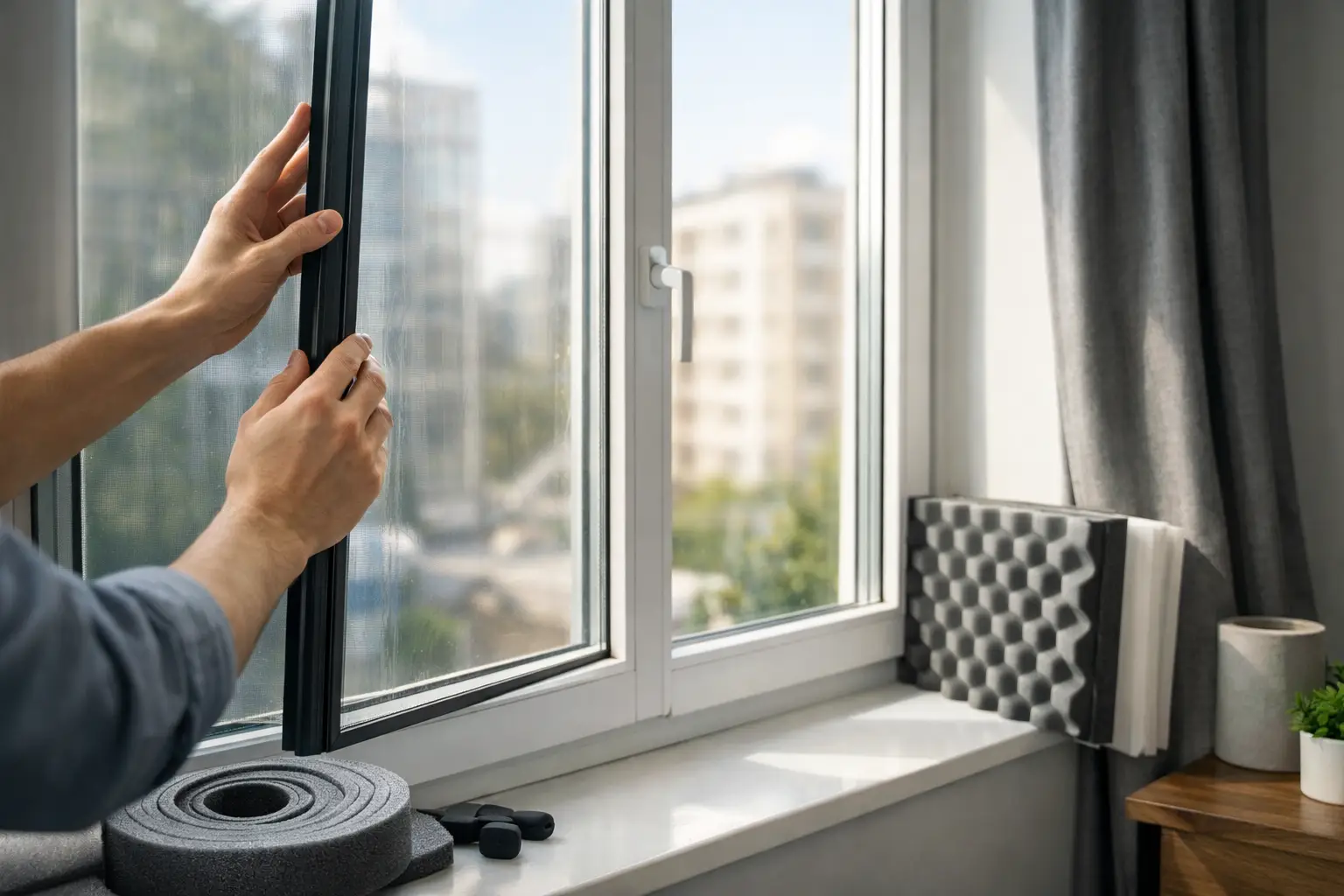
Sealing is the most cost-effective place to begin, but it has limits. High-quality compression seals around opening sections can reduce rattles and improve the window’s airtightness. Properly fitted brush seals may help on some sliding sash windows, where a conventional compression seal is not always suitable.
Do not rely on foam strips, tape or heavy curtains as a permanent solution. They can offer a small improvement, but they rarely tackle the principal weak points and may affect how the window opens, drains or ventilates. Curtains and blinds are valuable for privacy, light control and warmth, yet their effect on external noise is modest compared with improving the glazing and frame seal.
If your windows have trickle vents, do not simply block them. Background ventilation helps control condensation and maintain healthier indoor air. Where noise is a particular concern, ask a glazing specialist about acoustic ventilators designed to reduce sound transfer while preserving ventilation.
How to soundproof windows with secondary glazing
Secondary glazing is an additional internal pane fitted inside the existing window reveal. It is especially effective because it creates a sizeable air gap between the original glazing and the new panel. That gap helps interrupt the path of sound and can also improve thermal comfort.
This option is often worth considering for period homes, sliding sash windows and properties where preserving the external character of the building matters. The original windows can remain in place while a discreet internal system provides a meaningful improvement in comfort.
Performance depends heavily on the detail. A well-sealed secondary frame and a generous gap generally perform better than a panel placed very close to the existing glass. The system should also be practical to open for cleaning and allow access to the primary window where needed. For bedrooms, consider how the arrangement will work for ventilation and fire escape requirements before making a decision.
Secondary glazing does not automatically suit every room. It changes the internal reveal slightly, and some homeowners prefer the cleaner sightlines of a complete replacement window. However, where retaining original frames is a priority, it can be one of the most effective noise-reduction measures available.
Choose acoustic glazing when replacing windows
If frames are ageing, difficult to operate or due for replacement, new double or triple glazing can be designed with sound reduction in mind. The key is not simply adding more glass. Two identical panes of standard glass can still transmit a similar range of sound frequencies, especially if the unit and frame are not carefully specified.
Acoustic glazing commonly uses laminated glass, where two panes are bonded with a specialist interlayer that helps dampen vibration. It can be combined with an insulated glazed unit and paired with another pane of a different thickness. Using glass of unequal thicknesses helps prevent both panes from responding in exactly the same way to sound.
The gap between panes matters too. A wider cavity can improve acoustic performance, although there is no single ideal specification for every property. Low-frequency noise from lorries, buses or rail traffic behaves differently from higher-frequency voices, tyres on wet roads or birdsong. A glazing survey should identify the dominant source of disturbance before recommending the glass build-up.
Triple glazing can be an excellent choice for energy efficiency, but it is not automatically quieter than a well-designed acoustic double-glazed unit. The performance of the whole window matters: glass type, cavity arrangement, gaskets, frame construction and installation all work together. This is why a like-for-like comparison of pane count alone can be misleading.
Do not overlook the frame and installation
A premium glazed unit will not perform as intended in a poorly fitted frame. The frame must be correctly sized, securely fixed and sealed at the perimeter, with careful attention to junctions with brickwork, render and internal finishes. This is where experienced installation makes a lasting difference.
Modern uPVC and aluminium windows can both provide strong acoustic performance when specified and fitted properly. The right choice is often guided by the property’s style, desired sightlines, maintenance preferences and overall design. Slim aluminium profiles may suit a contemporary extension, while a flush casement or sliding sash style can complement a more traditional home without compromising practical performance.
Opening configuration also plays a part. Fixed panes are naturally easier to seal than opening sections, but most homes need windows that open for ventilation and everyday use. A quality casement window with effective locking points and compression seals can achieve a very tight closure. Ask to see how the proposed window closes and seals rather than judging the product on glass alone.
Manage expectations: quieter is realistic, silent is not
No domestic window can make a property completely silent. Sound may still travel through walls, roof spaces, air bricks, doors and even adjoining structures. If a room remains noisy after window improvements, those elements may need attention too.
It is also useful to distinguish between reducing sound and changing its character. Better glazing may significantly soften the sharpness of passing traffic or reduce the volume of conversation outside, even if you can still hear that activity. For many households, that difference is enough to transform sleep quality and day-to-day comfort.
For a room facing a particularly busy road, combining measures usually gives the strongest result: well-sealed replacement windows or secondary glazing, suitable acoustic ventilation and attention to gaps around the building fabric. Treating the window as part of the whole external wall creates a more reliable outcome than expecting one product to solve every issue.
A practical route to a quieter home
Begin with condition. If your current windows are sound but leaky, adjustment, new seals and careful perimeter sealing may be all that is needed. If the frames are historically significant or externally protected, investigate secondary glazing. If the windows are reaching the end of their useful life, specify replacement glazing around the noise you actually hear, not just a generic energy-efficiency rating.
A detailed survey is particularly valuable for homes in Nottinghamshire and across the East Midlands where traffic exposure can vary sharply from one elevation to the next. A front bedroom may need a different specification from a sheltered rear room, and there is little value in paying for the same upgrade everywhere if the conditions are not the same.
Kingdom Architectural Glazing Systems can help homeowners weigh these choices against appearance, ventilation, energy performance and long-term durability. The right window solution should feel like part of the home, not a compromise imposed by its surroundings.
A quieter room is rarely created by the thickest glass alone. It comes from a considered combination of glass, gaps, frames and skilled fitting – chosen to suit the way your home looks, works and is used every day.
Recent News
8 October 2026
French Doors for Brighter Garden Living Spaces
6 October 2026
How to Choose Aluminium Bifold Doors That Last
4 October 2026
Heritage Style Aluminium Windows for Period Homes
2 October 2026
Choosing the Best Windows for Period Homes