A front door does far more than close off an entrance. It sets the tone for the property, protects the people inside and must stand up to years of British weather. Steel doors have become a compelling choice for homeowners who want a refined architectural look alongside serious security and dependable long-term performance.
Whether you are renovating a period property, completing a contemporary extension or improving a commercial entrance, the right door should feel considered rather than simply functional. Steel offers a distinctive balance of strength, slim sightlines and design flexibility that few materials can match.
Why steel doors make a difference
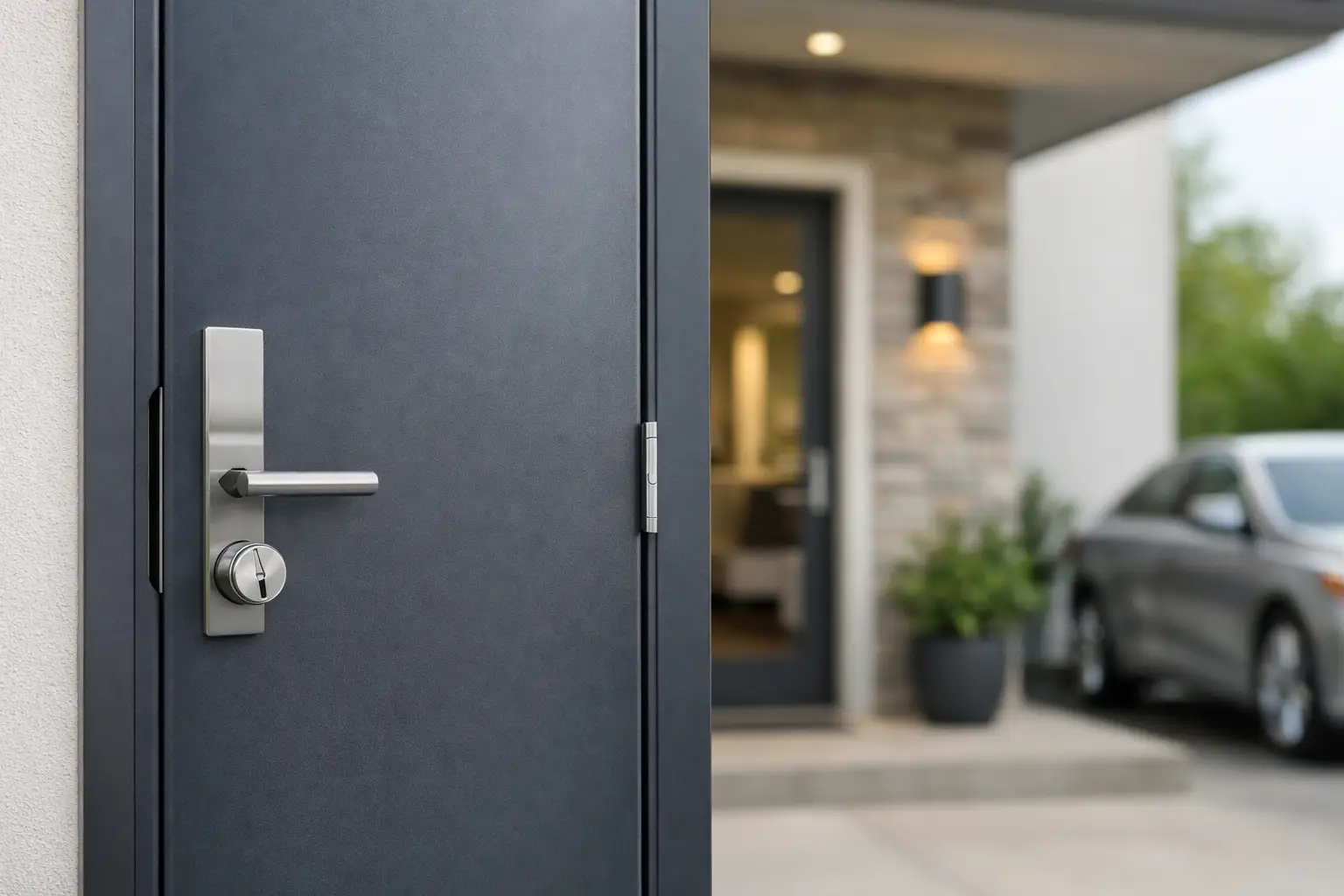
The most immediate advantage of steel is strength. A well-engineered steel door provides a highly secure barrier at one of the most vulnerable points in a home. Its rigid construction can support advanced locking systems and quality hinges, helping to resist forced entry while giving everyday operation a reassuringly solid feel.
That strength also allows for slimmer profiles than many alternative door materials. Slim framing means more room for glass, which is particularly valuable where you want to bring natural light into a hallway, side return, garden room or internal living space. The result can be crisp, elegant glazing with a strong architectural presence rather than a heavy-looking entrance.
Steel is not only for ultra-modern homes. Black, charcoal and deep bronze finishes suit industrial-inspired schemes beautifully, but softer colours and traditional detailing can work equally well on Victorian terraces, country homes and heritage-style renovations. Glazed panels, decorative bars and bespoke configurations give homeowners the freedom to create a door that complements the building rather than competing with it.
Steel doors for external and internal spaces
It helps to begin with the door’s job. External steel security doors are designed to protect the home from weather, intrusion and daily wear. Internal steel-framed doors, by contrast, are often chosen to divide rooms without losing light or visual connection.
External entrance doors
For a main front, side or rear entrance, thermal performance matters as much as appearance. An external door should include an insulated core or thermal break, quality weather seals and appropriate glazing to help reduce draughts and heat loss. The complete door set matters here – frame, threshold, locks, glass and installation all affect how it performs.
Security should be assessed as a system too. Look for a strong frame, multi-point locking, secure cylinder options and toughened or laminated glazing where glass is included. A premium door can only deliver its intended protection when it is accurately measured, properly fixed and carefully adjusted.
Internal glazed doors and partitions
Steel-look internal doors are especially effective in open-plan homes where separate zones are useful but a solid wall would make the space feel darker or smaller. They can create a practical division between a kitchen and lounge, home office and hallway, or dining area and garden room while preserving a sense of openness.
Here, the key decision is often the level of acoustic privacy required. A glazed internal door will not make a room silent, but quality seals and the right glass specification can make a noticeable difference. Consider how the space will actually be used: a quiet study benefits from a different specification than a decorative room divider.
Choosing the right design for your home
A steel door is a lasting feature, so it is worth considering the wider elevation and interior scheme before choosing the frame layout. A single glazed panel creates a calm, contemporary look. Horizontal or vertical bars add definition, while more detailed grid designs can introduce a classic industrial character.
Proportion is particularly important. On a narrow entrance, too many bars can feel busy. On a large glazed opening, however, carefully spaced divisions can give the design structure and scale. The best solution usually responds to the window lines, brickwork, roof detailing and available light around it.
Colour should be approached in the same way. Dark finishes remain popular because they frame glazing cleanly and contrast well with pale render, natural stone and light interiors. Yet a colour matched to existing windows, rainwater goods or a feature wall can produce a more cohesive result. A textured or matt finish can be forgiving in high-touch areas, while a smoother finish may better suit a formal contemporary elevation.
Glass selection deserves equal attention. Clear glazing maximises daylight and views, but privacy glass, obscure glass or carefully positioned glazing may be more appropriate for doors facing the street or neighbouring properties. For a front door, a glazed side panel can brighten a dark hallway without necessarily exposing the interior.
Performance is about more than the material
Steel has an understandably strong reputation for security, but a door should never be selected on material alone. Thermal efficiency, weather resistance, glazing specification and installation quality all influence the finished result.
For external doors, ask about the U-value of the complete door set rather than relying on the performance of an individual component. Lower values generally indicate less heat transfer, but the suitable target will depend on the property, the size of the opening and whether the work forms part of an extension or renovation subject to Building Regulations.
Coastal exposure, shaded entrances and frequently used family doorways also create different demands. A sheltered porch door has a less challenging job than a fully exposed rear entrance. Likewise, a busy household may value durable finishes, practical handles and low-maintenance thresholds above a more intricate design.
Fire performance is another area where assumptions can cause problems. Not every steel-framed glazed door is fire-rated, and not every location requires a fire door. Where a door forms part of an escape route, separates a garage from a home or serves a commercial setting, the specification must be checked carefully against the relevant requirements. This is an area where professional advice is essential.
The value of professional installation
Even a superb door can disappoint if the opening has been poorly surveyed or the installation lacks precision. Steel doors require careful alignment so that locks engage correctly, seals compress as intended and the door opens smoothly without catching. Small errors can affect weather performance, security and the overall appearance.
A specialist survey should consider the condition of the existing opening, the threshold detail, drainage, surrounding finishes and any structural alterations required. This is particularly relevant in older Nottinghamshire and East Midlands properties, where walls and openings are not always perfectly square.
Professional fitting also protects the visual outcome. Clean junctions, neatly finished trims and accurately positioned hardware make the difference between a door that looks like an afterthought and one that feels integral to the property. At Kingdom Architectural Glazing Systems, the focus is on matching premium products with the detailed surveying and installation they deserve.
Maintenance and long-term care
Steel doors are valued for durability, but they still benefit from simple routine care. Wipe down frames and handles with a soft cloth and mild cleaning solution, keeping abrasive products away from coated finishes. Check drainage channels and weather seals occasionally, particularly after autumn leaf fall or severe weather.
Moving parts should be inspected in line with the manufacturer’s guidance. If a door starts to catch, feels difficult to lock or shows a change in alignment, address it early rather than forcing the mechanism. Prompt adjustment can prevent unnecessary wear and maintain the door’s security and weather seal.
Is steel the right choice?
Steel can be an excellent investment where design, security and slim-framed glazing are priorities. It is particularly well suited to statement entrances, glazed extensions, internal partitions and properties where ordinary door profiles would feel too bulky. It may not be the automatic answer for every project, however. Budget, exposure, insulation requirements and the style of the building should all guide the choice.
The most successful steel door is one that has been designed around the home and fitted with care. Choose the specification for the way you live, not simply the look you have seen elsewhere, and it can add everyday confidence as well as lasting character to the property.
Recent News
8 October 2026
French Doors for Brighter Garden Living Spaces
6 October 2026
How to Choose Aluminium Bifold Doors That Last
4 October 2026
Heritage Style Aluminium Windows for Period Homes
2 October 2026
Choosing the Best Windows for Period Homes