Condensation trapped between the panes is more than an annoyance that spoils the view. It is a clear sign that the sealed unit has failed, allowing moisture into the gap that should insulate your home. Knowing how to replace failed double glazing helps you make the right investment: often, the glass can be renewed without replacing a perfectly sound window frame.
For homeowners improving an older property, this can be a practical way to restore warmth, clarity and comfort while preserving the style of existing uPVC, aluminium or timber windows. The key is identifying whether the problem is limited to the glazing unit or whether the wider window needs attention.
What does failed double glazing look like?
Double glazing is made from two panes of glass separated by a spacer bar and sealed around the edge. The cavity is commonly filled with an insulating gas, such as argon, and contains a moisture-absorbing material. Once the perimeter seal breaks down, outside air and moisture can enter the cavity. This creates the familiar misted, cloudy or dirty-looking appearance between the panes.
The most reliable sign is moisture that cannot be wiped away from either side of the glass. Condensation on the room-facing surface may simply mean there is excess humidity in the home. Condensation on the outer pane can actually indicate that an efficient unit is retaining heat well. Moisture between the panes, however, points to a failed sealed unit.
You may also notice draughts around the window, cold patches near the glass, discolouration around the spacer bar or a rattling pane. These symptoms do not always have the same cause. A draught could stem from worn seals, hinges or locks rather than the glass itself, which is why a proper assessment matters.
Can you replace the glass without replacing the whole window?
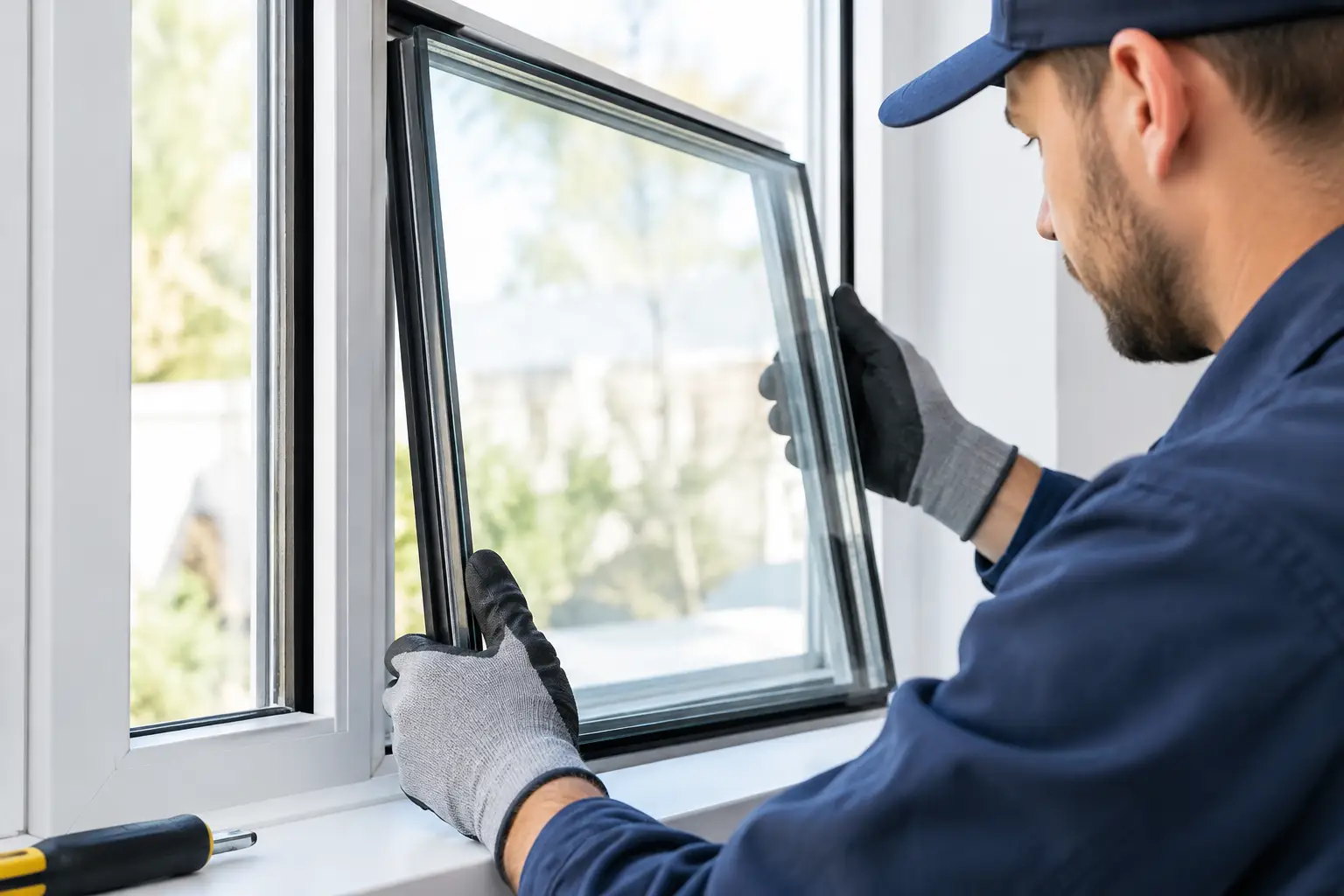
In many cases, yes. If the frame is structurally sound, operating smoothly and securely fixed, replacing the failed double-glazed unit is usually the most sensible option. A specialist measures the existing unit, removes the glazing beads, takes out the misted glass and installs a new made-to-measure sealed unit.
This approach avoids unnecessary disruption and retains the appearance of your home. It can be particularly useful where windows match other elevations, sit within a character property or have been installed relatively recently.
A full window replacement is more appropriate when there are wider issues. Cracked, warped or rotten frames, failed locking mechanisms, persistent draughts, damaged hinges, poor installation or outdated single glazing can all change the calculation. If you are planning an extension or a larger renovation, it may also be worth considering whether new windows could improve sightlines, ventilation, security and the overall design of the property.
How to replace failed double glazing: the professional process
Replacing a sealed unit sounds straightforward, but accuracy is essential. A few millimetres can affect how the unit sits in the frame, while the wrong glass specification can compromise safety, thermal performance or appearance.
Start with a detailed inspection
An experienced installer will first confirm that the misting is inside the sealed unit and check the condition of the frame, opening sash, gaskets, hinges and hardware. They will also establish whether the existing pane is standard double glazing, laminated glass, toughened safety glass, decorative glass or a more specialised specification.
Safety glazing is particularly important in doors, sidelights, low-level windows and certain bathroom locations. It must be replaced with a suitable compliant product, not simply the cheapest available pane.
Measure the existing unit precisely
The replacement unit must match the glass size, overall thickness and spacer arrangement required by the frame. Modern units are not all identical. Some older windows use narrower cavities, while newer systems may accommodate thicker, more energy-efficient units.
The survey should also record the visible glass pattern, spacer-bar colour and any leadwork, Georgian bars, obscure glass or integral blinds. Small details have a significant effect on the finished result, especially on a prominent front elevation.
Specify glass that improves performance
A replacement is an opportunity to move beyond a like-for-like repair. Low-emissivity glass can help retain warmth by reflecting heat back into the room, while argon-filled cavities and warm-edge spacer bars can reduce heat loss around the edge of the unit.
The right specification depends on the window’s location and how the room is used. A south-facing room may benefit from solar-control glass if overheating and glare are problems. A bedroom close to a busy road may benefit from acoustic laminated glass. Ground-floor windows and doors may require enhanced security glazing. These upgrades should be selected for a clear reason, rather than added as a one-size-fits-all package.
Remove and refit with care
On installation day, the glazing beads are carefully removed and the failed unit is lifted out. The frame rebate is cleaned, new packers are positioned correctly and the replacement sealed unit is fitted squarely. Packings are not a minor detail: they help support the glass, keep the opening sash aligned and prevent stress on the unit.
The installer then refits the beads and checks that windows and doors open, close and lock as they should. On a well-managed job, the work is tidy, disruption is limited and the old glass is removed for responsible disposal.
Is replacing failed double glazing a DIY job?
It is possible to buy replacement sealed units, but this is rarely the best choice for a valuable home improvement. Glass is heavy, breakable and potentially hazardous. More importantly, an incorrect measurement, poor packing arrangement or wrong glass specification can leave you with a unit that looks wrong, performs poorly or fails prematurely.
There is also the question of identifying the root cause. If the original unit failed because drainage channels are blocked, glazing gaskets are damaged or the sash is misaligned, simply fitting new glass may not solve the underlying problem. A professional survey gives you a clearer answer before money is spent.
For homeowners in Nottinghamshire and the surrounding East Midlands, choosing an experienced glazing specialist also provides reassurance that the replacement will suit the window system, meet relevant safety requirements and be fitted with care.
How long should replacement double glazing last?
A quality sealed unit can often last 15 to 20 years or longer, although its lifespan depends on the original product, exposure to weather, installation quality and how the window has been maintained. South- and west-facing elevations can face greater thermal stress, while coastal conditions, poor drainage and damaged seals can shorten service life.
No sealed unit lasts forever, but premature failure deserves investigation. If several units from the same installation have misted within a short period, check whether a warranty applies. Keep any original paperwork where possible, including invoices and guarantee documents.
Regularly clearing drainage paths, keeping frames clean and addressing stiff hinges or damaged gaskets promptly can help protect the wider window system. Avoid drilling into frames or using harsh cleaners around seals, as both can cause avoidable damage.
When replacement glass is the smarter investment
Replacing a failed unit makes particular sense when the frame still complements your property and the rest of the window performs well. It restores a clear view, improves insulation and can refresh the appearance of a room for considerably less disruption than replacing the full window.
That said, misted glass can be a useful prompt to look at the bigger picture. If rooms remain cold, noise is intrusive or windows feel insecure, a sealed-unit replacement may be only part of the answer. A considered survey lets you compare the cost of repair against the long-term benefits of a broader upgrade.
The best result is not simply a clear pane of glass. It is a properly specified, carefully fitted unit that looks right in your home and continues to perform through many winters to come. If you can see moisture between the panes, arrange an assessment before the problem becomes an accepted part of the view.
Recent News
25 November 2026
Are Conservatories Usable Year Round? What It Takes
23 November 2026
What Is a Garden Room? Space, Style and Value
21 November 2026
Best Window Styles for Bungalows Compared
19 November 2026
Can Conservatories Add Property Value? What Matters