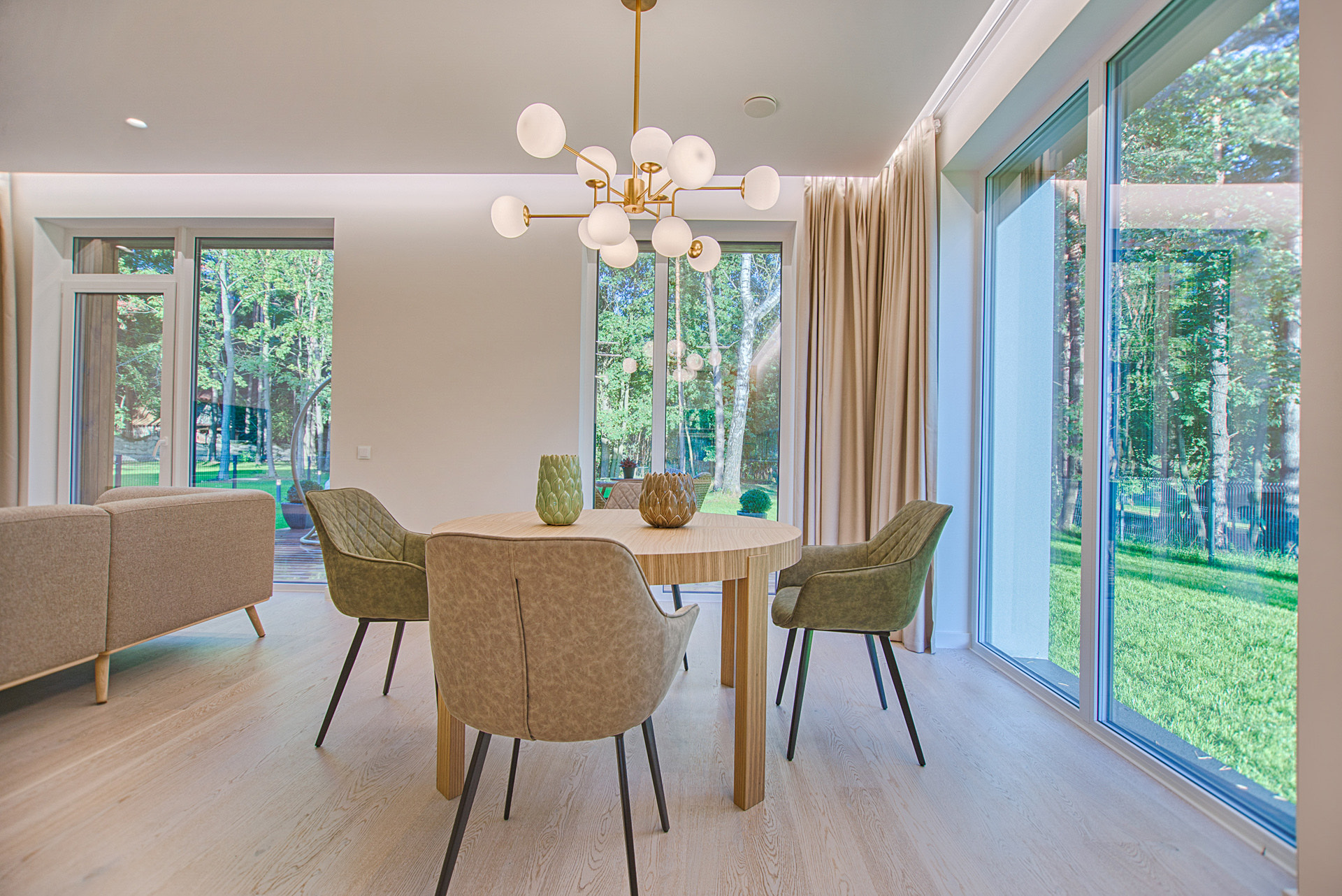
A patio door should make the garden feel closer, not leave the room noticeably colder once the evening arrives. Well-chosen energy efficient patio doors can transform a kitchen, extension or living area with generous natural light and clear garden views, while helping to keep warmth where it belongs. The difference comes from more than the glass alone: frame design, door configuration, seals and professional installation all have a part to play.
For homeowners planning a renovation or extension, this is an opportunity to improve the comfort and character of the home at the same time. A high-performing door can reduce draughts, support lower heating demand and provide the refined, slim-profile look expected from modern glazed spaces.
What makes patio doors energy efficient?
Thermal performance is measured by how readily heat passes through a product. In simple terms, a lower U-value indicates that less heat is lost through the door. When comparing options, ask for the U-value of the complete installed door set, rather than focusing only on the centre of the glass. Frames, spacers, panels and edge details all affect the final result.
Modern double glazing is often an excellent choice for many homes, especially when it uses low-emissivity glass, warm-edge spacer bars and an insulating gas-filled cavity. Low-E glass has a fine coating that helps reflect heat back into the room while still allowing useful daylight through. Warm-edge spacers reduce heat transfer around the perimeter of each glazed unit, where condensation can otherwise be more likely.
Triple glazing can offer further insulation, but it is not automatically the best answer in every project. It is heavier, may affect sightlines depending on the system, and can add to the overall cost. For a large south-facing opening, solar control and ventilation may be just as relevant as achieving the lowest possible U-value. The right specification should suit the orientation of the property, the size of the opening and how the room is used.
Airtightness matters as much as glass
A door can have impressive glazing on paper but still underperform if air leaks around the frame or sliding sashes. Quality patio door systems use carefully engineered seals, multi-chambered sections and precise locking points to limit unwanted air movement when closed.
Installation is equally important. The frame must be set square, securely fixed and sealed correctly to the structure. Small gaps at the perimeter can undermine thermal performance and create cold spots around the opening. This is why an experienced, accredited installer is worth choosing for a major glazed feature, particularly where wide spans or structural alterations are involved.
Choosing energy efficient patio doors for your home
The best door style depends on the space you want to create. Each option can perform well when specified and fitted properly, but they offer a different balance of views, opening width and everyday practicality.
Sliding patio doors
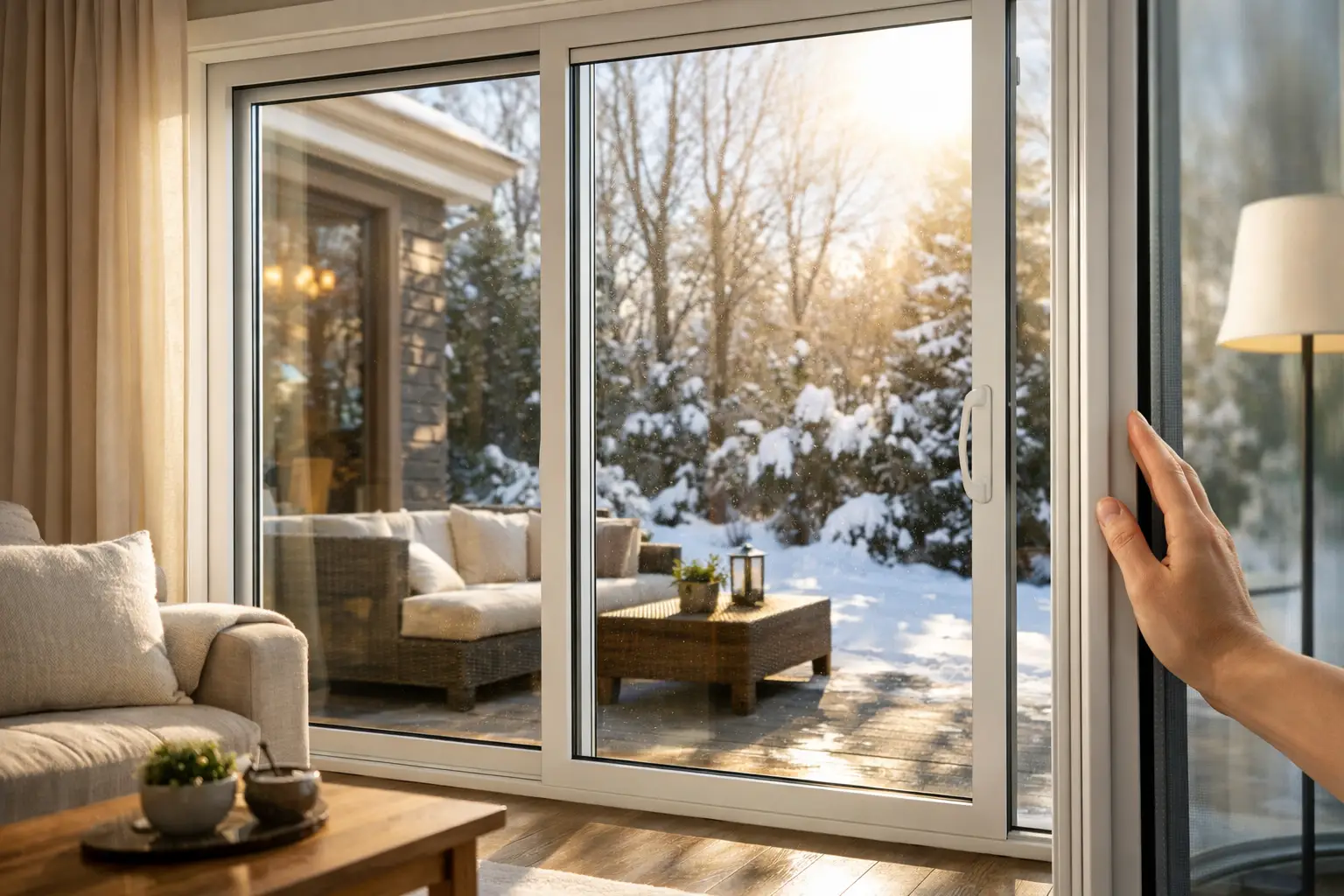
Sliding doors are a strong choice where uninterrupted views and wide glass panels are the priority. Because the panels move along a track rather than swinging into the room or garden, they are practical for patios, dining areas and extensions where furniture sits close to the opening.
Premium aluminium sliding doors can combine slim sightlines with thermally broken frames. A thermal break is an insulating barrier within the aluminium profile that limits the transfer of heat through the metal. This allows homeowners to enjoy the strength, durability and contemporary appearance of aluminium without accepting the cold-frame performance associated with older systems.
There is a trade-off to consider. A conventional two-panel slider normally leaves one half of the opening fixed when open. Multi-panel arrangements can create wider access, although they require sufficient wall width and careful planning around panel sizes.
Bifold doors
Bifold doors are designed to fold back and open up a large part of a wall. They are especially effective for entertaining spaces, garden rooms and extensions where the aim is to blur the boundary between indoors and out. High-quality aluminium bifolds use thermal breaks and weather seals to provide strong year-round performance, not simply a summer feature.
Their main advantage is opening flexibility. On mild days, the doors can be fully folded back; on cooler days, a traffic door can provide easy access without opening the entire arrangement. However, bifolds have more frame sections than a sliding door, so they usually present slightly more visible aluminium or uPVC across the view. If a panoramic outlook is the priority, a slimline slider may be the better fit.
French doors
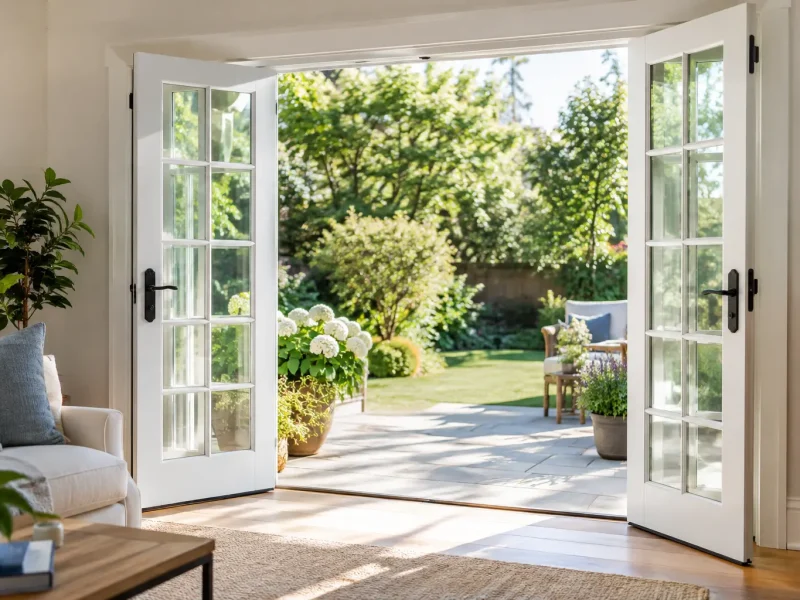
French doors remain a timeless option for period homes, traditional renovations and smaller rear openings. They bring symmetry and charm, with both doors able to open for clear access outside. Available in modern uPVC, aluminium and other specialist materials, they can deliver reliable insulation alongside an appearance that suits classic architecture.
For properties across Nottinghamshire and the wider East Midlands, French doors can be a particularly considered choice where an existing opening should retain its original proportions. The key is to select a frame profile and glazing specification that respects the building while bringing it up to modern thermal expectations.
Frame materials and their role in warmth
uPVC remains popular because it is cost-effective, low maintenance and naturally insulating. Modern uPVC patio doors are available in a broad range of finishes and can provide excellent energy efficiency, making them suitable for many family homes and refurbishment projects.
Aluminium is valued for its strength, crisp detailing and ability to support larger glazed panels. It is particularly well suited to contemporary extensions and wide openings, but only thermally broken aluminium systems should be considered for an external patio door. The quality of the profile, glass and installation will determine how well the finished door performs.
Material is not simply a question of budget. A compact uPVC French door may be ideal for one home, while an expansive aluminium slider is the right architectural response for another. Looking at the door in the context of the room, garden and property style leads to a better long-term decision than choosing on headline price alone.
Do not overlook solar gain and comfort
Large glazed doors welcome daylight, but they also interact with the sun. South- and west-facing rooms can become uncomfortably warm in summer if the glass is not specified thoughtfully. Solar control glazing can help reduce the amount of solar energy passing into the room, without making the space feel dark.
This needs a balanced approach. Glass that blocks too much solar gain may reduce the free warmth that is welcome in cooler months. Roof overhangs, blinds, external shading and ventilation can also play a role. A well-designed glazed extension considers all seasons, rather than treating energy efficiency as a winter-only concern.
Condensation is another useful indicator of how a room is performing. Occasional condensation can occur when indoor air is humid, particularly after cooking or bathing, but persistent moisture around doors may point to poor ventilation or cold surfaces. Trickle vents, extractor fans and everyday ventilation habits help manage humidity alongside good glazing.
Questions to ask before you order
Before committing to a patio door, ask for clear information on the complete door’s U-value, glazing make-up, security hardware and warranty. Confirm how the threshold will work with internal floor levels and the patio outside. A low threshold can make access easier, but drainage and weathering details must be properly resolved.
It is also sensible to discuss sightlines, panel weights and the direction of travel. A door that looks excellent in a showroom must work just as well with your dining table, kitchen island, garden furniture and daily routines. If the project involves removing a wall or enlarging an opening, structural requirements and Building Regulations should be addressed before the order is placed.
At Kingdom Architectural Glazing Systems, the focus is on matching premium, high-performing glazing to the home and the way it will be lived in, then fitting it with the care the product deserves. A considered consultation can identify whether sliding, bifold or French doors will give you the strongest blend of warmth, light, security and style.
The most successful patio doors are the ones you stop thinking about: they glide easily, close securely, keep the room comfortable and make stepping into the garden feel effortless in every season. Choose the specification with that everyday experience in mind, and the investment will continue to add value long after installation day.
Recent News
8 October 2026
French Doors for Brighter Garden Living Spaces
6 October 2026
How to Choose Aluminium Bifold Doors That Last
4 October 2026
Heritage Style Aluminium Windows for Period Homes
2 October 2026
Choosing the Best Windows for Period Homes