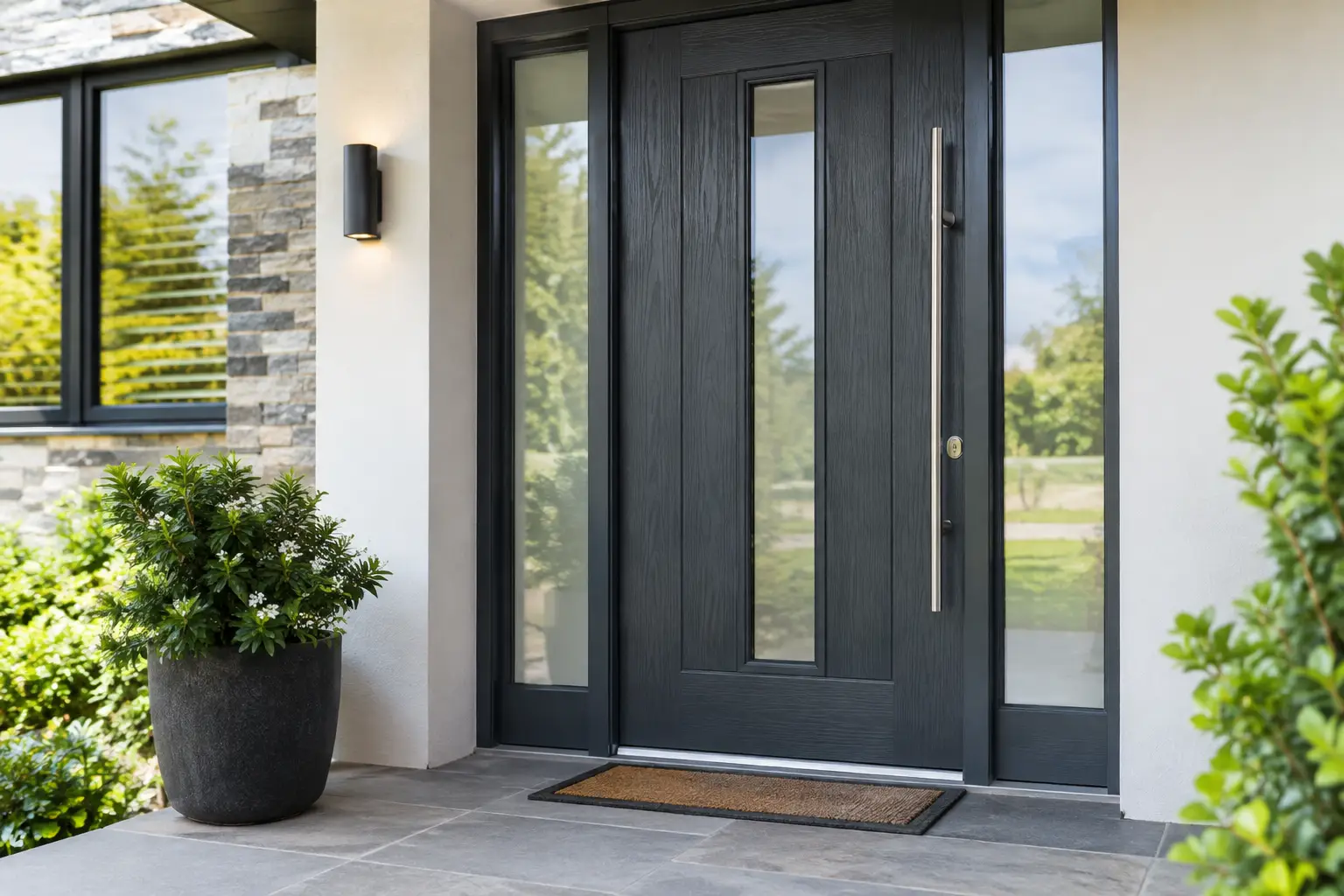
A front door is one of the few home improvements you use every day, see from the street and rely on for security. This composite entrance doors guide is designed to help you look beyond colour swatches and choose a door that feels right for your property, performs well through British weather and represents a sound long-term investment.
Composite doors have become a popular choice for homeowners because they combine the character of a traditional timber door with the lower-maintenance benefits of modern materials. The best result, however, depends on more than choosing a design you like. Construction, glazing, locks, fitting quality and proportion all matter.
What is a composite entrance door?
A composite entrance door is made from several materials rather than a single slab of timber, uPVC or aluminium. Although specifications vary between manufacturers, the door is commonly built around a solid or insulated core, with reinforced layers and a durable outer skin designed to resist everyday knocks, moisture and fading.
This layered construction gives the door its name and is a major reason it can provide strength, thermal performance and a convincing timber-style finish in one product. Many designs feature moulded woodgrain detailing, deep panels and traditional hardware, so they can complement period homes without the regular painting associated with a painted timber door.
It is worth recognising that not every composite door is made to the same standard. The core material, slab thickness, frame, seals and locking system will influence how the door feels, closes and performs over time. A low initial price can sometimes mean compromises in these areas.
Why homeowners choose composite doors
For many properties, the appeal is balance. A composite door can make a strong first impression while addressing practical concerns around draughts, security and maintenance.
A well-specified door should feel substantial rather than hollow, with a close, reassuring fit against the frame. Its insulated construction can help reduce heat loss at the entrance, particularly when replacing an ageing timber door or poorly fitting older uPVC door. The difference is often most noticeable around the hallway, where cold spots and draughts can make the whole house feel less comfortable.
Security is another key consideration. Modern composite doors can be paired with reinforced frames, high-security cylinders, multi-point locking and strong hinges. The door slab is only one part of the security picture, so it is sensible to consider the complete system rather than focusing solely on the lock badge or the appearance of the handle.
Maintenance is usually straightforward. Periodic cleaning with mild soapy water and an occasional check of hinges, seals and moving parts will help keep the door looking and working as intended. Unlike natural timber, a quality composite finish will not require routine sanding and repainting, although it still deserves proper care.
Choosing the right style for your property
The best composite entrance door should belong to the architecture of the house, not compete with it. A Victorian terrace, country cottage and contemporary new-build may all suit a composite door, but rarely the same one.
For traditional homes, look for authentic panel proportions, woodgrain texture, decorative glazing and heritage-inspired colours. Deep blue, green, black, red and softer neutral shades can work beautifully, depending on the brickwork, render and existing windows. A classic knocker, letterplate and traditional handle can complete the look, but make sure the finishes work together rather than appearing as separate choices.
Contemporary properties often suit cleaner lines: flush or lightly detailed panels, simple glazed apertures and more restrained hardware. Anthracite grey remains popular, but it is not the only modern option. Black, white, muted greens and carefully chosen timber effects can all create a more individual frontage.
Consider the door in context. Look at the roofline, porch, window frame colour, external lighting and the distance from the pavement. A bold door can be effective, yet a heavily glazed or highly detailed design may look out of place on a small elevation. If you are matching existing windows, ask to see physical colour samples in daylight rather than relying only on a screen image.
Glazing brings light, but requires thought
Glazed panels and sidelights can transform a dark hallway by drawing in natural light. Obscure, etched or patterned glass maintains privacy, while clear glass can suit entrances set back from the road or properties with a secure enclosed approach.
The trade-off is straightforward: larger glazed areas can reduce privacy and may alter the thermal performance of the overall door set. Quality sealed units and well-designed glazing can still perform very well, but it is wise to discuss your priorities before settling on a layout. For some homes, a narrow glazed panel or matching side panel offers the right compromise.
Performance details that deserve attention
A door should look good on installation day and continue to work reliably years later. Ask for clear information about the specification rather than assuming every door has the same performance credentials.
Thermal efficiency is often expressed as a U-value. In simple terms, a lower figure indicates less heat passing through the door. However, compare complete door-set values where possible, not just the advertised performance of the slab itself. The frame, glazing, threshold and installation all affect the finished result.
Weather resistance also matters in the East Midlands, where wind-driven rain and changing temperatures place pressure on exposed entrances. Effective seals, a correctly fitted threshold and accurate adjustment are essential. A premium door can still underperform if it is not installed squarely and carefully.
When discussing security, ask about the multi-point locking system, cylinder protection, hinge security and reinforcement within the frame. Hardware should be suited to the door’s weight and daily use. A strong door that catches, drops or needs force to lock is not delivering the experience you paid for.
Composite doors guide: questions to ask before ordering
Before approving a quotation, establish what is included. Is the price for the complete door, frame, glazing, threshold, locks, handles, letterplate and fitting? Are old doors removed and disposed of? Will trims or surrounding finishes be required once the existing frame has been taken out?
It is also helpful to ask how the installer will measure the opening, assess the condition of the surrounding brickwork and manage any complications, such as a recessed porch, rendered reveal or uneven threshold. These details are often where a straightforward replacement becomes more involved.
If you are choosing a particularly dark colour for a south-facing entrance, seek advice on the manufacturer’s recommendations. Dark finishes can absorb more heat in strong sunlight, and the right product and installation approach will help protect long-term appearance and operation.
Finally, review warranty terms carefully. A meaningful warranty should make clear what is covered for the door slab, frame, glazing, hardware and installation. It is a practical sign of confidence, but it should also be easy to understand.
Installation is part of the investment
Even the finest composite door depends on expert installation. Accurate surveying ensures the new door is proportioned correctly, while skilled fitting helps achieve consistent gaps, reliable locking and effective weather seals. The finishing work around the frame is equally important, especially where a front entrance is highly visible.
Choosing an experienced, accredited installer offers reassurance that the project will be managed professionally from initial discussion through to aftercare. At Kingdom Architectural Glazing Systems, the focus is on helping homeowners select a door that fits their property, practical priorities and preferred style, then fitting it with the care a prominent home improvement deserves.
Your entrance should welcome you home, protect what matters and make the right impression before anyone steps inside. Taking time to compare complete specifications, not just colours and prices, is the surest way to choose a composite door you will be pleased to close behind you every day.
Recent News
8 October 2026
French Doors for Brighter Garden Living Spaces
6 October 2026
How to Choose Aluminium Bifold Doors That Last
4 October 2026
Heritage Style Aluminium Windows for Period Homes
2 October 2026
Choosing the Best Windows for Period Homes