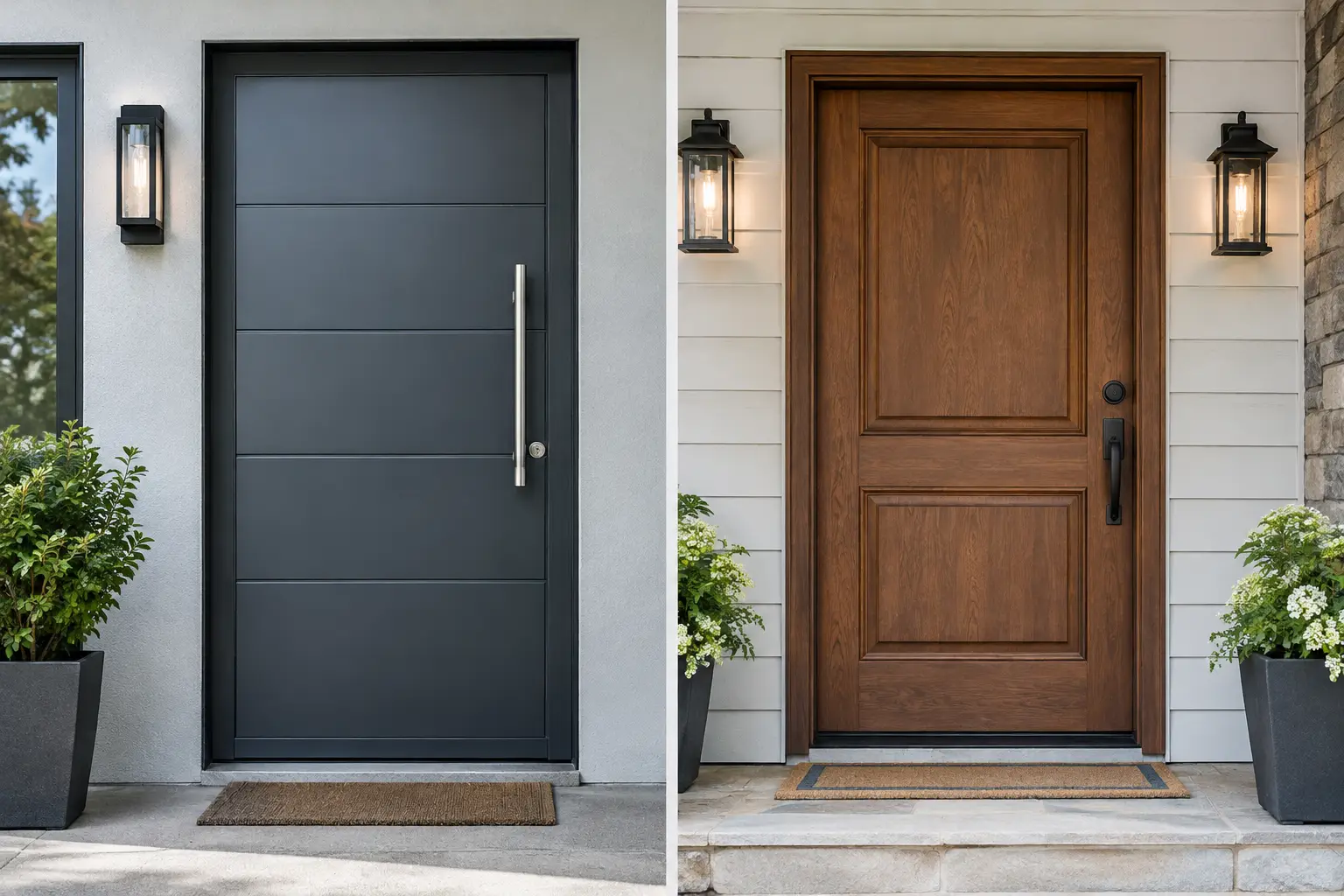
A front door has to do more than look the part. It needs to stand up to daily use, keep heat where it belongs, protect your household and complement the character of the property. When deciding between steel or composite doors, the best choice depends on what matters most to you: maximum physical security, a particular architectural look, thermal performance or a balance of all three.
Both can be excellent investments when specified and installed properly. The key is to look beyond the material name and consider the door’s construction, locking system, glazing, frame, fitting and the way it will be used.
Steel or composite doors: the essential difference
A composite door is designed specifically for residential entrances. Rather than being made from one material, it combines layers that may include a reinforced core, insulating foam, timber or polymer elements, and a durable outer skin. This layered construction gives composite doors their reputation for warmth, strength and low maintenance.
A steel door uses steel as its principal structural material. Residential steel security doors are engineered for strength and resistance to forced entry. They can suit properties where security is the overriding priority, as well as homes seeking a crisp, contemporary or industrial-inspired entrance.
It is worth checking exactly what a supplier means by steel door. Some products are purpose-made security doors with solid or insulated panels, while slim steel-framed glazed doors are primarily chosen to divide internal spaces or create a refined architectural feature. The right product should always match its intended location and performance requirements.
Security: strength is only part of the story
Steel has an obvious advantage in raw material strength. A well-designed steel security door, paired with a secure frame, reinforced hinges and high-quality locking hardware, can provide formidable protection. It is a sensible option for homeowners who want a visibly substantial entrance door or have specific security concerns.
Composite doors also offer very strong residential security. Their dense construction, reinforced frames and modern multi-point locking systems make them far more secure than many older timber or basic uPVC doors. For most family homes, a quality composite door provides the reassuring everyday protection people expect without making the entrance feel overly commercial.
The lock and installation matter as much as the slab itself. A premium door can only perform as intended if it is correctly sized, fitted squarely and secured to a suitable opening. Ask about the locking cylinder, hinge protection, frame reinforcement and the security standard achieved by the complete door set, not simply the panel.
Warmth and weather resistance
For a typical exposed UK front entrance, thermal performance deserves serious attention. Composite doors are generally designed with insulation in mind, helping to reduce draughts and heat loss while providing a solid, comfortable feel. Their construction also makes them well suited to changing weather conditions, provided seals and thresholds are maintained.
Steel doors can be insulated too, but the design is especially important. Steel naturally conducts heat, so a poorly specified product may create a thermal weak point around the frame or door leaf. Look for insulated cores and thermal breaks that reduce heat transfer between the external and internal faces.
This does not mean steel is unsuitable for residential use. It means the door should be selected as a complete, thermally considered system. A specialist installer can assess the opening, exposure to wind and rain, and the relationship between the door, frame and surrounding brickwork before recommending a solution.
Style: making the entrance suit the property
Composite doors offer exceptional versatility. They are available in traditional, cottage, Victorian and contemporary styles, with a wide choice of colours, decorative glazing, hardware and woodgrain finishes. That makes them particularly effective for period properties, suburban family homes and renovations where the new door needs to sit naturally alongside existing windows and brickwork.
Steel doors have a more distinctive visual presence. Clean lines, slim detailing and darker finishes can create a bold contemporary statement, especially on modern extensions, converted commercial buildings or properties with industrial influences. A steel entrance can also work beautifully as part of a coordinated scheme with aluminium windows, glazed screens or slimline doors.
Neither option is automatically more stylish. A composite door can look refined and understated, while steel can feel out of place if its design is too severe for a traditional façade. Consider the wider elevation: roofline, window frames, render or brick colour, external lighting and any nearby glazing all influence the final result.
Maintenance and everyday use
Composite doors are favoured by many homeowners because they are straightforward to care for. Routine cleaning with mild soapy water, occasional lubrication of moving hardware and checks to seals are usually enough to keep the door performing well. Quality finishes are made to resist fading, warping and the seasonal movement associated with natural timber.
Steel doors need little day-to-day attention but do require an appropriate factory finish and sensible care. Scratches should be dealt with promptly, particularly in coastal or highly exposed locations, to protect the coating and prevent corrosion. Hinges, locks and weather seals still need periodic inspection, just as they do on any external door.
Think about how the door will be used. A busy household may value the forgiving, low-maintenance nature of composite. A homeowner prioritising a highly secure, statement entrance may feel the additional care required by steel is a worthwhile trade-off.
Cost and long-term value
Composite doors often provide the strongest all-round value for standard residential front-door replacements. They combine insulation, security, weather resistance and broad design choice at a price point that can be tailored through glazing, hardware and finish selections.
Steel security doors are typically a more specialist investment. Their cost can rise with the required security specification, insulation, bespoke size, finish and installation complexity. That higher initial outlay may be justified where maximum resistance, a particular architectural aesthetic or a non-standard opening calls for a more engineered solution.
Price comparisons should always include the complete installation. Removing the existing door, preparing the aperture, finishing internal and external trims, fitting hardware and ensuring weather-tight seals all affect the result. The least expensive quote is rarely the best value if corners are cut on the frame, locks or fitting quality.
When a composite door is likely to be right
A composite door is often the natural choice if you want a welcoming, high-performing front entrance with plenty of options to suit the property. It is particularly well suited to homeowners who want strong security and energy efficiency alongside traditional styling, decorative glass or a carefully matched colour.
For many Nottinghamshire, Derbyshire and wider East Midlands homes, it provides a practical upgrade from an ageing timber or uPVC door while preserving the home’s existing character. It can also be a confident choice for newer developments where kerb appeal and reliable everyday performance are equally important.
When steel is the better answer
Choose a steel security door when the priority is exceptional physical strength, a more architectural appearance or a bespoke solution for a demanding entrance. It can be ideal for contemporary homes, secluded properties, side entrances and projects where security requirements go beyond the ordinary.
Steel may also suit commercial or mixed-use settings, although the specification should reflect fire safety, access, insulation and security needs for that building type. The right advice at the survey stage prevents a visually impressive door from becoming the wrong technical choice.
Make the decision with the whole entrance in mind
The most successful entrance doors are not selected from a brochure in isolation. They are chosen after considering the existing opening, wall construction, exposure, security priorities and the look you want the property to have from the pavement.
At Kingdom Architectural Glazing Systems, that consultative approach helps turn a door choice into a lasting improvement rather than a short-term replacement. Whether steel or composite feels right, choose a professionally specified and carefully fitted system that gives you confidence every time you close the door behind you.
Recent News
25 November 2026
Are Conservatories Usable Year Round? What It Takes
23 November 2026
What Is a Garden Room? Space, Style and Value
21 November 2026
Best Window Styles for Bungalows Compared
19 November 2026
Can Conservatories Add Property Value? What Matters