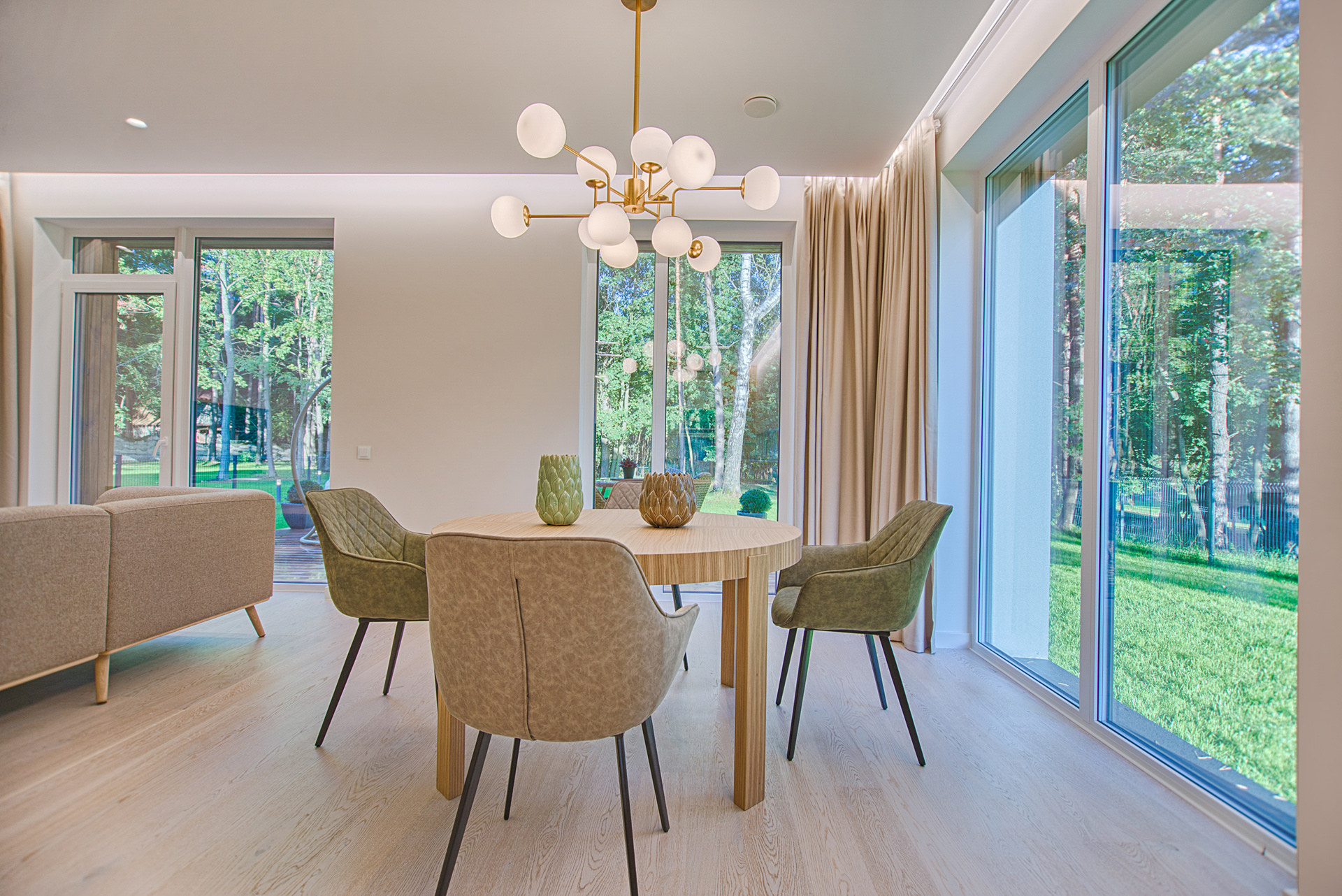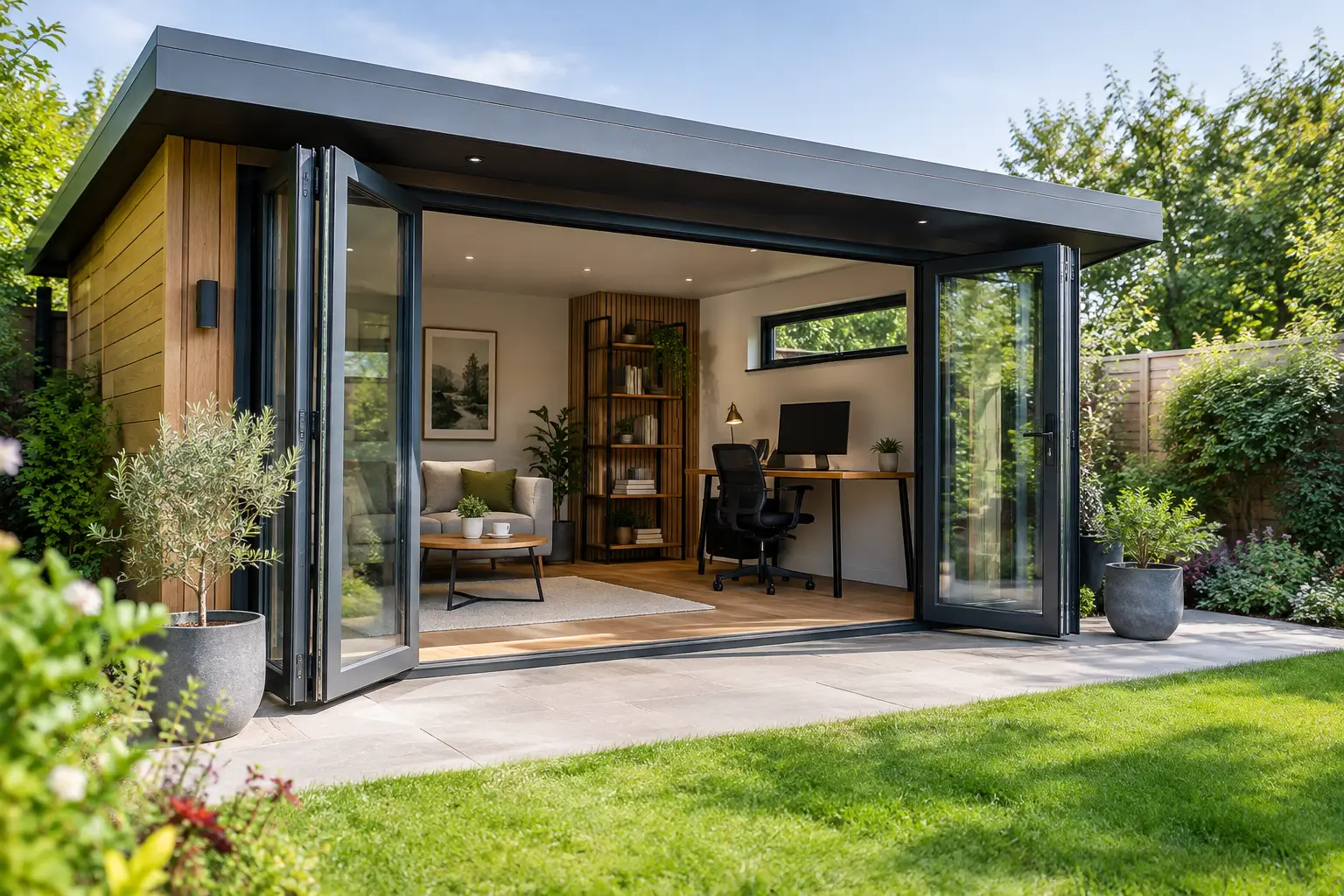
A garden room with glass doors can change how a home feels long before you step outside. Instead of a separate outbuilding that is dark for much of the year, it becomes a light-filled extension of daily life: a place for family meals, quiet work, entertaining or simply enjoying the garden in comfort. The quality of the glazing, the door layout and the installation all determine whether that vision works as well in January as it does on a warm July afternoon.
For homeowners investing in a garden upgrade, the appeal is clear. Large glazed openings make the room feel more generous, create a stronger connection with the garden and allow daylight to reach further into the house. However, choosing glass doors is not simply a case of selecting the widest possible opening. The best result balances views, thermal performance, security, ventilation and the way you intend to use the space.
Why glass doors make a garden room feel different
A well-designed garden room should feel connected to the house without losing its own character. Glass doors help achieve that balance. They frame the garden, draw in natural light and give the room a more open, architectural finish than a solid wall or small window arrangement.
This matters particularly on properties where the garden is a valued part of family life. When the doors are closed, you still have a clear view of planting, patios and changing seasons. When conditions allow, opening them creates an easy flow for children playing outside, summer gatherings or an evening meal that moves naturally between indoors and out.
The amount of glazing needs careful consideration. A south- or west-facing garden room can be beautifully bright, but it may also receive strong afternoon sun. High-performance double or triple glazing, solar-control glass and appropriate shading can reduce glare and help prevent overheating. For a north-facing space, maximising glass can make excellent sense, provided the frames and sealed units are selected for strong insulation.
Choosing doors for a garden room with glass doors
There is no single right door style. The best option depends on the available wall width, the desired opening, your furniture layout and the architectural style of the property.
Slimline sliding doors for uninterrupted views
Sliding glass doors are a popular choice where the priority is a wide, clean view of the garden. Their panels glide behind one another, so they do not need internal or external clearance to open. This makes them practical beside a dining table, sofa or patio furniture.
Aluminium sliding doors can accommodate generous glass panels with comparatively slim sightlines, giving a refined contemporary appearance. They are especially effective on modern extensions and garden rooms with a level threshold leading onto a patio. The trade-off is that part of the opening remains occupied by a fixed panel when the doors are open. If you want the entire frontage to open, another configuration may suit you better.
Bifold doors for a wide-open feel
Bifold doors fold and stack to one or both sides, opening up most of the aperture. They are ideal for homeowners who picture the garden room as an entertaining space, where the boundary between room and terrace can almost disappear in good weather.
They do require space for the folded panels, and the frame sightlines are naturally more visible than with large sliding panes. That is not necessarily a disadvantage. On a more traditional home, well-proportioned bifolds can add rhythm and definition, particularly when finished in a colour that complements the existing windows and doors.
French doors for classic character
For smaller garden rooms, or properties with a more traditional design, French doors remain an excellent solution. They offer a welcoming central opening and can be paired with fixed side panels to increase light without overwhelming the elevation.
French doors are often more cost-effective than a large sliding or bifold system, yet still provide a high-quality connection to the garden. Their hinged leaves need room to open, so the patio layout should be planned around them. Outward-opening doors are often the practical choice in compact rooms, while inward-opening doors may work where the external space is limited.
Performance should sit behind the view
Expansive glazing should never mean compromising on comfort. A garden room is only as useful as its performance on a cold morning, during heavy rain or after dark. Quality glass units, thermally broken aluminium frames and professionally fitted seals all help maintain a stable indoor temperature and reduce draughts.
Look beyond a headline U-value and consider the whole system. The glass specification, frame profile, spacers, installation detail and the construction of the garden room itself all contribute to real-world performance. If the room is intended for year-round use as a home office, family room or dining space, this is where investing in a premium system pays back in comfort.
Security deserves the same attention. Modern glazed doors can incorporate multi-point locking, toughened or laminated safety glass, secure cylinders and strong aluminium or composite frames. Large glass doors should feel reassuringly solid in operation, with precision hardware and panels that slide, fold or close smoothly. A quality installation is central to that confidence.
Design details that make the space work
The most successful garden rooms are planned from the inside out. Begin with how you will use the room and where furniture needs to sit. A desk positioned directly opposite full-height glass may be inspiring, but it could create screen glare. A dining area near bifolds may be perfect for summer, but it needs sufficient circulation space when the doors are open.
Floor level is another important detail. A low or flush threshold can create a more natural transition to the patio and improve accessibility. It also demands careful drainage and precise installation, especially on exposed sites. Done properly, it gives the garden room a considered, high-end finish rather than the sense of a separate add-on.
Frame colour can either blend the room into the house or make it a distinctive feature. Anthracite grey and black remain popular for contemporary schemes, while softer greys, whites and heritage shades can suit period properties. Aluminium is particularly versatile because it offers durable powder-coated finishes and slim profiles, while uPVC may be a sensible choice for homeowners prioritising value and low maintenance.
Do not overlook ventilation. Opening doors are useful, but roof vents, opening windows or integrated trickle ventilation may be needed to keep the room fresh when the doors stay closed. This is particularly relevant for garden rooms used as offices, gyms or spaces with frequent cooking and entertaining.
Planning, orientation and practical considerations
Whether planning permission is required depends on the size, position, height and intended use of the garden room, as well as the property type and any local restrictions. A detached garden building and an extension attached to the house are assessed differently. Listed buildings, conservation areas and homes with previous planning conditions may also need additional care.
Building regulations can apply where the structure is heated, connected to the main dwelling or designed for certain uses. It is worth discussing this early, rather than treating it as an afterthought once the design is fixed. An experienced glazing specialist can help ensure the doors, glass and threshold design are appropriate for the project from the outset.
Orientation should shape the specification too. East-facing rooms enjoy morning light, while west-facing rooms often become the favourite evening space. South-facing glazing may benefit from solar-control glass, overhangs, blinds or planting that softens direct sun. On an exposed garden, consider how wind affects the location of opening doors and whether a veranda or sheltered patio would make the space more comfortable.
A considered investment in everyday living
A garden room should not be chosen as a showroom feature alone. The right glazed doors need to suit the architecture of the home, perform reliably through the seasons and support the way your household actually lives. That may mean broad sliding panels for a calm garden view, bifolds for lively family gatherings, or classic French doors that bring character to a smaller space.
For homeowners in Nottinghamshire and the surrounding counties, Kingdom Architectural Glazing Systems can help turn those decisions into a tailored design, with premium door systems and professional installation that give the finished room the quality it deserves. A thoughtful conversation at the planning stage can lead to a garden room you will use far more often than you first imagined.
Recent News
25 November 2026
Are Conservatories Usable Year Round? What It Takes
23 November 2026
What Is a Garden Room? Space, Style and Value
21 November 2026
Best Window Styles for Bungalows Compared
19 November 2026
Can Conservatories Add Property Value? What Matters