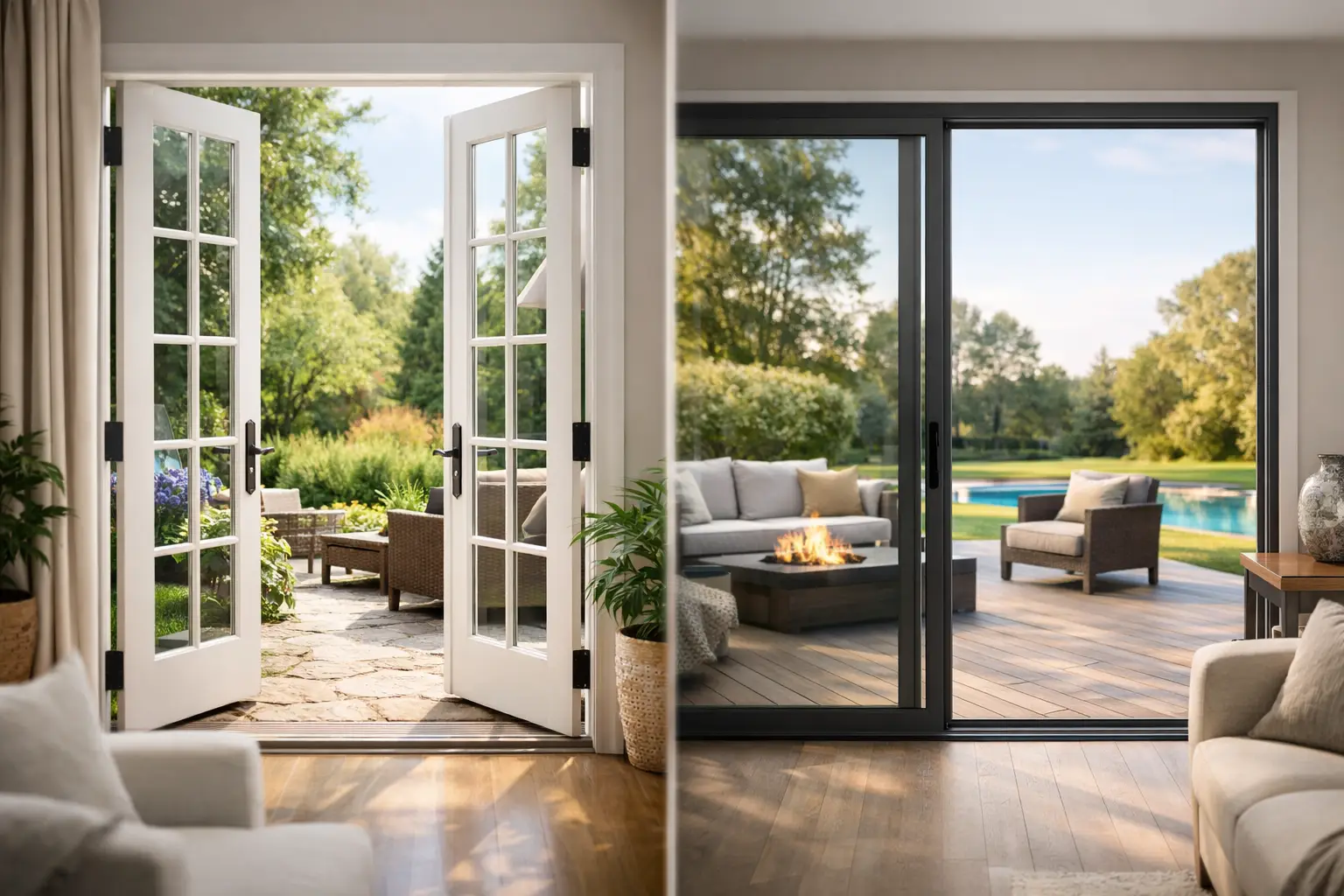
A rear extension can look entirely different depending on the doors you choose. In the French doors vs patio doors decision, the best option is rarely about one product being universally better. It is about how you use the room, the width of the opening, the character of the property and the view you want to frame.
For many homeowners, the term patio door means a sliding door. Technically, French doors can also open onto a patio, but the comparison usually comes down to hinged double doors versus doors that slide along a track. Both can bring more daylight into your home, provide a practical route to the garden and improve the feel of a kitchen, dining room or living space. Their strengths, however, are quite different.
French doors vs patio doors: the key difference
French doors consist of two glazed, outward- or inward-opening door leaves that meet in the centre. One leaf is often used as the everyday access door, while opening both creates a clear, generous opening to the garden. They are recognised for their symmetrical appearance, traditional sightlines and flexibility in period homes, cottages and modern renovations alike.
Patio doors are most often sliding doors. One or more glazed panels move horizontally behind another fixed or sliding panel, so the doors do not need any swing space. Slimline aluminium sliding doors take this idea further, using narrow frames and larger panes of glass to maximise the view and natural light.
The practical question is therefore simple: would your home benefit more from a fully open doorway at certain times, or from large uninterrupted glass and a space-saving everyday entrance?
When French doors are the right choice
French doors suit homeowners who value character and the feeling of a proper opening between house and garden. With both doors folded back, there is no fixed central panel in the way. This is particularly appealing for summer entertaining, moving furniture, or creating an easy flow from a dining area onto a terrace.
Their proportions also work very well in standard-sized openings. Where the structural opening is relatively modest, French doors can feel balanced and purposeful rather than forcing a wide glazing system into a space that does not need it. They can be specified in uPVC or aluminium, with frame colours, glazing bars and hardware selected to complement the architecture of the home.
For traditional properties, French doors often look more at home than a broad sliding system. A well-designed set can echo the vertical proportions of existing windows while still delivering modern thermal performance, secure locking and low-maintenance finishes. They are equally effective in a conservatory, orangery or garden room where the aim is to create a classic connection with the outside.
There are trade-offs. Hinged doors need clearance to open. Outward-opening doors preserve interior floor space but require a clear patio area, while inward-opening doors need room inside and may affect furniture placement. On exposed sites, you should also consider how the doors will behave in strong winds when opened.
Where sliding patio doors excel
Sliding patio doors are designed around glass, views and efficient use of space. Because the panels glide rather than swing, they are a sensible choice where a dining table, sofa or kitchen island sits close to the opening. You can leave a sliding panel partly open for ventilation without rearranging the room or blocking the terrace.
They are especially strong in wide apertures. A large sliding door can turn a rear elevation into a bright glazed backdrop, making a kitchen extension feel more connected to the garden throughout the year, not only when the doors are open. Premium aluminium systems offer slim frames, durable powder-coated finishes and the structural strength needed for larger glass panels.
The compromise is that one panel will usually remain in place, so the fully open section is smaller than the overall glazed width. For some families, that is of little consequence. For others, particularly those planning frequent gatherings or wanting a completely open threshold, French doors or bifold doors may feel more appropriate.
Sliding doors also need careful specification and fitting. Smooth-running tracks, accurate alignment, effective drainage and high-quality seals all affect daily operation and weather resistance. This is not an area to treat as a commodity purchase. A well-made, professionally installed door should feel solid, quiet and effortless from the first use.
Comparing style, space and everyday living
Style is often the first consideration, but it should not be the only one. French doors create a framed view, with a visible meeting point in the middle and a more decorative feel. They can add warmth and rhythm to a brick, stone or rendered elevation, particularly when matched with traditional or flush casement windows.
Patio doors create a more expansive, contemporary effect. The larger the glass panels and slimmer the frames, the less the garden feels separated from the room. This can be a major advantage if your garden is a key part of the property or you have invested in landscaping that deserves to be seen from indoors.
Think about the route through the doorway as well. French doors make a strong statement when fully opened, but a single active leaf may be enough for everyday trips outside. Sliding patio doors offer a consistent access route with no doors projecting into the room or garden. Homes with young children, pets or compact patios may find that convenience valuable.
Threshold choice matters too. A low threshold can reduce the step between inside and out, supporting easier access and a more refined transition to a patio. The correct detail depends on drainage, floor levels, building requirements and the exposure of the property, so it should be considered early in an extension or renovation project.
Energy efficiency and security are about specification
It is easy to assume that a door type alone determines warmth or security. In reality, the quality of the system, glazing, installation and hardware matters more. Both French and sliding patio doors can achieve excellent energy efficiency when specified with high-performance double or triple glazing, thermally efficient frames and properly fitted seals.
Large areas of glass can improve daylight and reduce the need for artificial lighting, but south-facing openings may also bring more solar gain in summer. The right glass specification can help manage this, while blinds, shading and thoughtful orientation all play a part. A glazing specialist should look at the room as a whole rather than simply recommend the biggest possible panels.
On security, look for multi-point locking, toughened safety glass where required and strong hinges or locking mechanisms designed for the door system. Aluminium patio doors are valued for their inherent strength, while quality French doors can provide excellent protection through modern locking and secure hardware. Professional installation is essential in both cases, as a premium door cannot perform as intended if it is poorly fitted.
Cost and long-term value
French doors are often the more cost-effective option for smaller openings, although material, glazing, colour, hardware and design details will all influence the final price. Sliding patio doors can represent a greater investment, particularly with slimline aluminium profiles and large panes, but they may add significant architectural impact and appeal to an extension.
Rather than comparing initial prices in isolation, consider what the door will contribute over many years. A door that improves the room’s usability, enhances insulation, complements the property and continues to operate smoothly is likely to offer better value than a cheaper alternative that compromises on fit, finish or performance.
Choosing the right door for your project
Choose French doors if you want a classic appearance, a fully clear opening and a solution that works beautifully in a modest or traditionally proportioned aperture. They are an excellent choice for extensions, conservatories and garden rooms where charm and flexibility are priorities.
Choose sliding patio doors if you want broad glass panels, a contemporary look and an access point that takes up no swing space. They are particularly effective across wide rear openings, where the view, daylight and connection to the garden are central to the design.
The best choice should feel considered, not compromised. At Kingdom Architectural Glazing Systems, the starting point is the opening, the property and the way you plan to live in the space. Seeing frame samples, discussing threshold details and assessing the room in person will usually make the right direction much clearer – and ensure your new doors look as good in ten years as they do on installation day.
Recent News
8 September 2026
Conservatory Roof vs Tiled Roof – Which Is Best?
2 September 2026
How to Reduce Window Draughts in Your Home
31 August 2026
Does Triple Glazing Reduce Noise at Home?
29 August 2026
Secure Back Door Options for a Safer Home