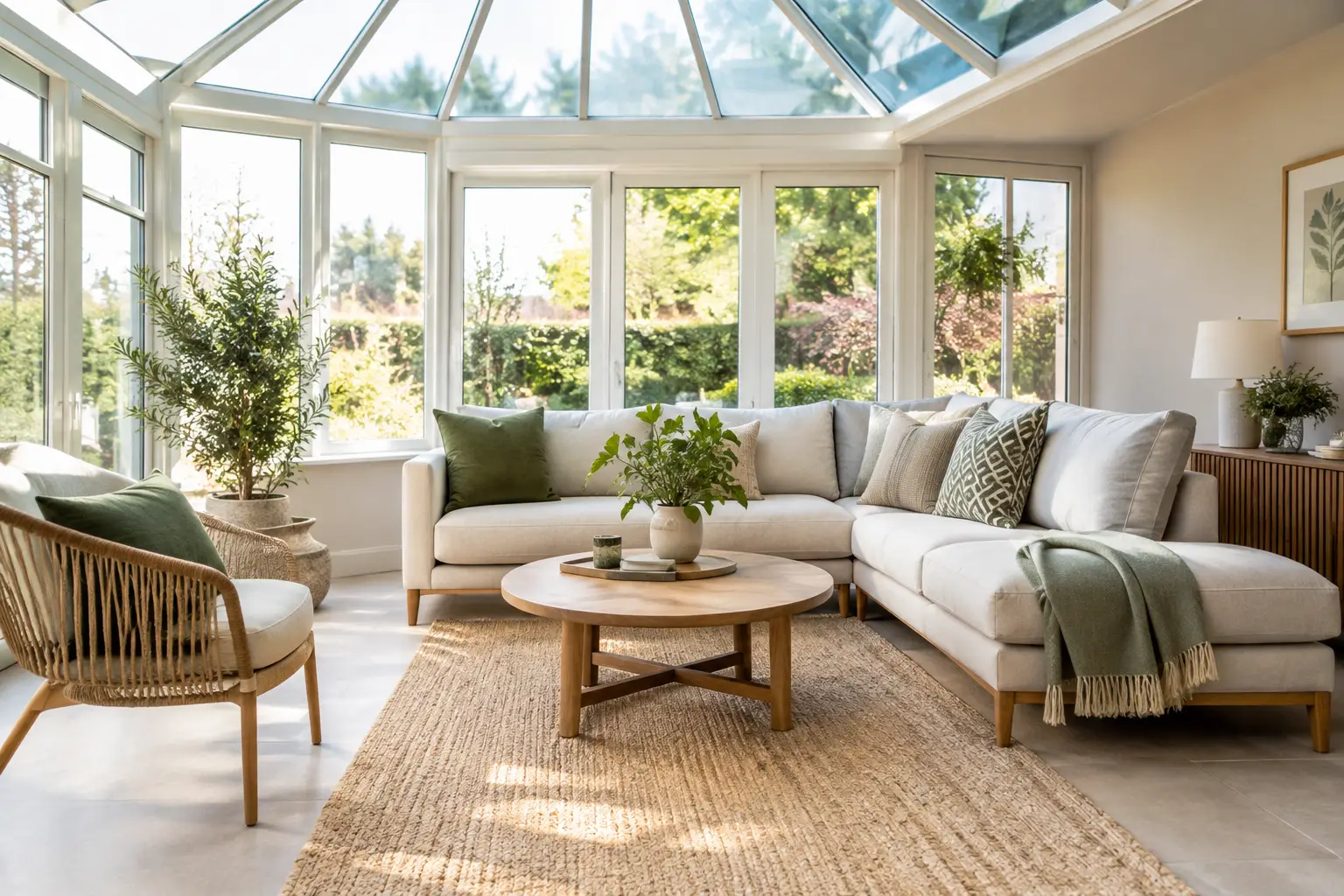
A conservatory should not be the room you avoid on bright summer afternoons or cold winter mornings. If you are considering how to modernise conservatory interior spaces, begin by looking beyond décor alone. The most successful updates combine a better-performing structure with considered finishes, turning an underused glazed room into a comfortable extension of the home.
For many properties, a conservatory has good bones but no longer suits the way the household lives. Dated frames, a tired roof, lightweight furniture and harsh lighting can make it feel separate from the main house. The right improvements can create a bright dining room, relaxed family space, home office or garden-facing retreat that earns its place all year round.
Start with comfort, not cushions
It is tempting to begin with paint colours and new furniture. However, if the room overheats, feels draughty or suffers from glare, decorative changes will only go so far. A modern conservatory interior needs a stable, usable temperature first.
Look at where the discomfort is coming from. Older polycarbonate roofs often allow excessive solar gain in summer while offering limited insulation in winter. Single glazing, worn seals and poorly performing doors can also have a noticeable effect. Condensation on glass, fading furnishings and rooms that are only pleasant for a few months each year are clear signs that the fabric of the conservatory needs attention.
A replacement conservatory roof can make the most dramatic difference. Modern glass roofs are designed to maximise daylight while helping manage heat and glare. Tiled or solid roof systems provide a more extension-like feel and can improve thermal performance significantly. The right choice depends on the structure, the orientation of the room and how much natural light you want to retain.
Upgrade the roof and glazing for year-round use
A modernised conservatory should connect you to the garden without leaving you exposed to every change in the weather. High-performance glazing, thermally efficient frames and professionally fitted roof systems help create that balance.
If your conservatory faces south or west, solar-control glass may be particularly valuable. It helps reduce the intensity of direct sunshine, so the room remains more comfortable on warm days without making it feel dark. For a north-facing room, retaining as much daylight as possible may take priority, making a clear, high-performance glazed roof an attractive option.
There is also an aesthetic decision to make. A sleek glass roof gives a light, contemporary appearance and preserves open views of the sky. A tiled roof can make the room feel more integrated with the property, especially where you want a cosier lounge or dining area. Hybrid designs, using roof windows or glazed panels within a solid roof, can offer a considered middle ground.
Replacing ageing windows and doors at the same time can complete the transformation. Slim aluminium frames work particularly well in contemporary homes, offering clean sightlines and generous glazing areas. Quality uPVC frames can be an excellent choice where a softer, traditional finish or a particular budget is required. Both need to be specified carefully for security, energy efficiency and visual harmony with the rest of the property.
Create a stronger connection to the garden
Modern conservatories feel less like isolated sunrooms and more like flexible glazed living spaces. One of the best ways to achieve this is to reconsider the opening between the room and garden.
French doors suit classic homes and provide a timeless, symmetrical look. Bifold doors can open a wide section of wall for entertaining, while slimline sliding doors are ideal when you want expansive glass and uninterrupted garden views with minimal frame. Sliding doors are often the practical choice for tighter patios because the panels do not project into the room or outside space when open.
The key is to avoid choosing a door solely because it is fashionable. Think about furniture placement, the route to the garden, the size of the opening and how often the doors will be used. A well-designed glazed door system should make the conservatory feel more generous every day, not simply look impressive when fully opened in summer.
Choose a simple, connected interior scheme
Once the room performs properly, the interior can do the work of making it feel genuinely current. The easiest approach is to treat the conservatory as part of your home rather than a separate decorative project.
Carry one or two colours or materials through from the adjoining room. This might be the same timber tone, a related wall colour, black hardware, warm neutral textiles or a consistent style of flooring. You do not need an exact match, but visual continuity helps the room feel intentional.
Warm whites, soft stone shades, muted greens and gentle grey-beiges work particularly well in glazed rooms because they respond naturally to changing daylight. Stronger colours can be effective too, but use them with care. A deeply coloured feature wall or painted joinery may add character, while covering every surface in a dark tone can make a modest conservatory feel enclosed.
Avoid filling the room with small decorative items. Glazing already creates plenty of visual activity through reflections, views and natural light. A calmer scheme, with a few substantial pieces, usually feels more refined.
Use flooring that can handle real life
Flooring has a major influence on whether a conservatory feels like a finished room. Old carpet, cold tiles or mismatched flooring can immediately date the space.
Large-format porcelain tiles are a strong option for garden-facing rooms. They are durable, straightforward to maintain and available in stone, concrete and timber-effect finishes. If the conservatory leads directly to the patio, using a similar indoor and outdoor tile can create a convincing visual flow.
Luxury vinyl tile and quality engineered wood can bring welcome warmth underfoot. They are especially suitable where the room is used as a lounge or dining space. Natural wood has obvious appeal, but it needs careful consideration in rooms with significant sunlight and temperature variation. Underfloor heating can be an excellent addition during a more substantial refurbishment, although it is rarely a sensible retrofit without addressing insulation and floor build-up first.
Layer lighting for evenings and darker months
A single central pendant rarely provides enough useful light in a conservatory. Modernise the room with layers: practical light for everyday use, softer illumination for evenings and focused lighting where it serves a purpose.
Discreet downlights can work well in a solid or tiled replacement roof, while wall lights create a warmer, more relaxed atmosphere. A pendant over a dining table gives the area definition, and a floor lamp beside a reading chair brings comfort without cluttering the ceiling. Dimmable fittings are worthwhile because a conservatory can move quickly from bright daylight to a dark garden view.
Choose warm-white bulbs rather than cool white light. Cooler lighting can make glass-heavy rooms feel clinical, whereas warmer tones help the space sit comfortably alongside the rest of the home.
Furnish for the room you actually need
Before buying furniture, decide what the conservatory is for most of the time. A room designed for occasional coffee with a garden view needs something very different from one used daily by a family.
For a lounge, choose a properly upholstered sofa or two comfortable chairs rather than lightweight conservatory furniture. Add a textured rug, side table and practical storage to make it feel lived in. For dining, prioritise enough clearance around the table and select chairs that remain comfortable over a longer meal. If the room will be used as a workspace, manage glare from the glazing before positioning a desk and include window coverings for video calls and concentrated work.
Furniture should not block the view or restrict access to doors. In smaller conservatories, one well-proportioned sofa and an occasional chair often work better than a full suite. Built-in bench seating can provide storage and seating without overwhelming the floor area.
Add shading and softness without hiding the glass
Blinds, curtains and shutters all have a role, but they should be chosen for performance as well as appearance. Pleated or cellular roof blinds can help manage glare and add insulation, while fitted blinds for doors and side windows offer privacy when needed. Roman blinds and full-length curtains introduce softness, particularly in conservatories that open from a lounge or dining room.
Planting is another effective way to soften the interior. A few large leafy plants in well-chosen pots can frame garden views and bring life to the room. Do not overfill the space, especially if direct sun and high temperatures make plant care difficult.
For homeowners in Nottinghamshire and the wider East Midlands, a professional survey is the sensible first step before committing to a roof, glazing or door upgrade. Kingdom Architectural Glazing Systems can advise on a solution that suits your property, the way you use the room and the standard of finish you expect.
The best conservatory updates are not about chasing a trend. They create a brighter, warmer and more useful room that feels as though it has always belonged to your home.
Recent News
25 November 2026
Are Conservatories Usable Year Round? What It Takes
23 November 2026
What Is a Garden Room? Space, Style and Value
21 November 2026
Best Window Styles for Bungalows Compared
19 November 2026
Can Conservatories Add Property Value? What Matters